9 Powerful Lessons from Hiking

Hiking is a voyage with great insights and personal development rather than only a physical exercise. Every climb offers different difficulties and benefits, whether your path is a calm woodland walk or a tough mountain trek. The natural environment offers insightful teachings along the way that one may use in many spheres of life. Nine strong hiking life lessons from hiking will be discussed in this article to inspire and change our approach to daily problems, such as developing resilience, awareness, and a closer relationship with the surroundings and ourselves. Here are some of the lessons from hiking.

Sandakphu trek

Not everything can be controlled

In the realm of hiking, "Not everything can be controlled" is a motto that more experienced hikers especially know. When starting a trek, we may map our path, pack appropriately, and get ready for anticipated circumstances of climate. Still, nature has a purpose. Unexpected wildlife encounters, sudden weather changes, or physical hurdles can all rapidly modify our path. These erratic components help us see the need of adaptability and fortitude. Hiking turns into a strong metaphor for life as it shows that although we may control our behavior and reactions, we cannot control the situation we come into.

hiking weather

This tolerance of uncertainty is a great asset rather than a sign of weakness. Accepting the uncertainty and adjusting to it on the path develops mental strength and humility. It reminds us that real mastery is our capacity to negotiate and flourish among uncertainty; control is frequently an illusion. Hiking calls for us to let go of our desire for control, trust in our readiness, and remain open to the lessons each step and mistake teaches, much like in life. This kind of thinking improves not just our hiking experience but also our whole attitude toward the unavoidable bends of life.

Ups and Downs are normal

Hikers come upon physical ascents and descents challenging their endurance and resilience as they negotiate paths spanning mountains and valleys. These bodily fluctuations reflect the emotional and psychological tides one rides in life. Every hill climb—often difficult and demanding—represents the difficulties we must overcome. On the other hand, the downhill routes demand cautious navigation to prevent mistakes, even if they provide comfort and a sense of success. Accepting the natural pattern of these ups and downs enables hikers to develop endurance, patience, and respect of the path—not only of goal.

Furthermore, the idea of ups and downs covers the erratic components of nature and the personal experiences of the hikers, therefore transcending the physical features of hiking. A hiking journey might vary depending on the weather, unanticipated path conditions, and personal tiredness. These swings help hikers to be flexible and strong, therefore arming them to approach uncertainty with a good attitude.

Accepting that ups and downs are natural helps people stay motivated even in trying circumstances, keep perspective, and achieve balance in life, much like on the path. Emphasizing the need of endurance and the knowledge that both the highs and lows help to contribute to personal development and fulfillment, the hiking experience—with its inherent unpredictability and demands—becomes a potent metaphor for life's path.

Always be prepared—lessons from hiking

Hiking imparts the vital lesson of always being ready. Experienced hikers understand the need to bring basics such as water, a first-aid kit, a map, and suitable attire while starting a trek. This preparation addresses survival as much as comfort. Unexpected changes in the temperature might make routes difficult to negotiate; crises can strike without notice. This ready concept goes beyond the path into daily life.

Being ready in life—whether for a job interview, a demanding assignment, or an unanticipated crisis—ensures we can manage whatever comes our way with confidence and resilience, just as a well-packed backpack could make the difference between a delightful trek and a perilous experience.

Power of light

In life as in trekking, the unanticipated is unavoidable. Being ready means knowing possible difficulties and arming oneself with the tools and knowledge to meet them. This kind of thinking motivates us to be proactive and helps us to make strategic plans ahead.

To remain relevant and competitive in our professions, for instance, being ready could include ongoing education and skill improvement. In human relationships, it implies developing good communication abilities to properly negotiate problems. Hiking emphasizes the need to be ready to handle the demands of life, as it reminds us that we cannot control every factor.

Don't compare your progress with others

Hiking offers the priceless lesson of emphasizing on our own road instead of measuring our development against others. Every hiker on a route proceeds at their own speed, overcoming certain difficulties and taking in distinct vistas. While some might dash forward, others slow down to enjoy every moment. This reflects our path in life, in which experiences, strengths, and situations define each person's development.

Comparing yourself to others might cause self-doubt and dissatisfaction that will eclipse the glory of your own successes. No matter how your pace compares to others, embrace it and value the development you have done.

lessons from hiking

Moreover, the peace of nature teaches us that true fulfillment comes from inside. The only rivalry on a trek is with oneself, trying to go beyond own constraints and worries. Constant comparison compromises important life qualities like resilience and self-compassion, which this kind of thinking helps to develop. You allow yourself more real experiences and greater personal development when you stop comparing your development to others. On the route and in daily life, hiking helps you to celebrate little successes, realize your own path, and develop a great sense of thanksfulness and satisfaction.

Manage resources well

Hiking teaches us the value of wise resource management—a lesson applicable even beyond the route. Every ounce of weight matters during a trek; hence, bringing just the correct quantity of food, drink, and equipment becomes rather important. This attentive thought helps one to develop understanding of resource management applicable for daily living.

Whether it's time planning, energy conservation, or financial budgeting, the discipline needed for a good climb reflects the methods needed to control resources in our personal and professional life. Hikers who learn to prioritize what is absolutely necessary and cut out extra develop an attitude toward sustainability and efficiency. This I can can as per my experience is one of the best lessons from hiking that I have learnt.

Hiking also emphasizes the need of readiness and flexibility. Unexpected weather, trail conditions, or physical restrictions can all cause even the best-laid plans to veer off course. Hikers must respond by making real-time decisions to save their resources, like water rationing or pace change. This adaptability provides a great life lesson: even while preparation is vital, the capacity to change and maximize what is at hand is as vital. As on the road, in life the harmony between readiness and flexibility may make all the difference between success and hardship.

Know when to call it quits and try again

On difficult courses, there are times when the terrain is too steep, the weather goes bad, or our energy runs out. Seeing these indicators and choosing to turn back is evidence of our intelligence and self-awareness rather than a sign of failing. It's about realizing our constraints, giving safety top priority, and realizing certain pursuits are better pursued another day. This awareness guarantees that we live to trek another path, therefore preventing us from pushing ourselves to the verge.

Like in trekking, in life tenacity is essential; however, so is the capacity for reevaluation and reordering. Sometimes, despite our best efforts, events call for us to stop, consider, and veer off course. This marks a calculated retreat to gather strength and get perspective, not a surrender of our aspirations. Adopting this kind of thinking helps us to develop resilience and adaptability—qualities needed to overcome challenges. Like experienced hikers who understand the need of rest and recuperation, we too have to learn when to back off, recuperate, and equip ourselves for next challenges with fresh vitality.

Learn to enjoy the process

Hiking imparts the priceless lesson of appreciating the journey instead of only aiming at the end. We come to value the trip in its entirety as we negotiate high hills, narrow paths, and deep forests. Every stride taken—on smooth roads or difficult terrain—carries with it a sense of success and improvement. This reflects life, in which the trip frequently has more importance than the ultimate destination. Accepting the process helps us to develop resilience, learn from difficulties, and find delight in little successes, thereby arming us to face the uncertainties of life.

Handi Gundi Night trek

Hiking also teaches awareness and patience, therefore helping us to live in the now. Hiking helps us to tune in to the noises of the environment, the rustling leaves, and the singing birds. This increased awareness extends into daily life and helps us to slow down and enjoy the here and now. Learning to appreciate the process helps us to change our emphasis from continual striving to a more balanced and rewarding approach in which we acknowledge and celebrate development, no matter how little. Hiking essentially helps us realize that the trip—with all its highs and lows—is what actually forms and enhances our life.

Keep moving on

Hiking imparts the priceless lesson of tenacity—keep on, even if the road gets rough. Like the difficulties we encounter in life, paths in the woods could get steep, rough, and demanding. Still, every stride forward puts us closer to our objective regardless of difficulty. Hiking helps us to realize that, regardless of speed, progress is progress. Our strength, resilience, and character are developed on the trip—not only at the end. The will to stay on despite obstacles reflects life's difficulties, where tenacity usually results in surprising benefits and personal development.

Dudhsagar trail

Hiking also helps us to enjoy the here-now and value the little successes we encounter on the path. Every milestone reached—that of reaching a picturesque point of view or conquering a particularly difficult portion of the trail—makes one happy and triumphant. This reminds us to acknowledge our achievements—minor ones, notwithstanding their seeming importance. It's important in life to recognize and value these times of development. They inspire us to keep moving forward by reminding us of our capacity. Applying this hiking-inspired attitude to daily life helps us to appreciate the beauty of small progress, the need of endurance, and the delight of marking our path.

It's all worth it in the end

Though many experienced hikers can attest, hiking is a trip that frequently tests the body and mind and is ultimately well worth it. Hiking provides among the most important life lessons endurance. The steep treks, challenging terrain, and unanticipated roadblocks teach us that, in life, perseverance pays off. Overcoming life's obstacles frequently results in a sense of success and clarity we wouldn't have experienced if we had given up, just as the amazing view from the peak makes the difficult climb worthy.

Roopkund trek the Himalayas Outdoor Adventure

Hiking also teaches the value of being present and appreciating the trip. Our fast-paced life makes it easy for one to get obsessed with objectives and locations and ignore the events along the road. Hiking helps us to slow down, see the beauty in our surroundings, and savor the present. This mindfulness exercise may be applied in our daily life to allow us to appreciate every stage of our own paths and realize that, although achieving our objectives is satisfying, the experiences and development we come across along the road are equally priceless.

Now that you have gone through the blog post on lessons from hiking, you might definitely want to consider reading my recent post on How to vlog while Hiking? – 7 valuable tips if you are interested in vlogging while hiking. Basically, it's not about vlogging for your YouTube channel but more like documenting your hiking journey.

Lessons from hiking conclusion

When we consider the nine insightful hiking life lessons, it is evident that the path presents a rich metaphor for the road of life rather than only physical activity. Every stride we make, every obstacle we surmount, and the beauty we come across along the road impart priceless lessons about resiliency, awareness, and personal development.

Hiking teaches us that although the road to our objectives may be rocky and steep, the benefits of tenacity, patience, and presence are almost impossible. So lace up your boots, welcome the adventure, and keep in mind that every climb is a trip across life itself rather than simply a path over the countryside. Let these teachings help you on and off the course, therefore enhancing your life with every stride you make.

Consider subscribing to my YouTube channel, and also don't forget to sign up for my newsletter. If you are considering hiking in India there are multiple options and many groups and trek organizes like Indiahikes, Youth Hostels, Trek the Himalayas, etc. who organize these treks. You defiently need to go on a hike to learn the lessons from hiking yourself and hiking benefits than just reading the blog posts or watching videos. Once you do some life-changing hikes, you will come up with your own blog post on your personal growth hiking stories. :) So, what is your hiking inspiration? Leave a comment below.

Kashmir Valley | Exploring the Enchanting Beauty

The Kashmir Valley, which can be found tucked away in the very topmost region of India, is often referred to as "Paradise on Earth." This area has been winning over the hearts of tourists for years because of its magnificent scenery, snow-capped mountains, and rich cultural legacy. In this article, we will delve deeply into the hypnotic beauty and cultural abundance of the Kashmir Valley, in addition to providing some helpful travel advice for anyone who is considering a trip there.

Kashmir Shankaracharya temple
Hilltop Shankaracharya temple in Kashmir at night. Image: © Ravindra Joisa

Natural Wonders of Kashmir Valley

People know that the Kashmir Valley has incredibly beautiful scenery. Here are some images of some of the most beautiful scenery in the world: All the way around the valley are the Himalayas, and from this spot, you can see beautiful mountains covered in snow.The well-known Naga Parbat and Mount Haramukh are among these mountains.

View from Hari Parbat fort
View from Hari Parbat Fort's window. Image: © Ravindra Joisa

The beautiful Dal Lake, which is also called the "Jewel in the Crown of Kashmir," is in Kashmir. Traditional houseboats and lush Mughal gardens surround it on all sides. People have called this lake "Jewel in the Crown of Kashmir." You can take Shikara rides, and you have to go to the floating market.

Kashmir valley - dal lake
Dal lake in Kashmir. Image: © Ravindra Joisa

The hill town of Gulmarg, also called the "Meadow of Flowers," is in Kashmir. It has lush fields and a golf course that is as good as the best in the world. There are a lot of people who want to ski and snowboard there every winter.

The famous Amarnath Yatra journey goes through the peaceful village of Pahalgam, which is also where it starts.Pachgam is where a lot of walkers stay for the whole trip. Everyone who loves nature will love this place because of the Lidder River and the lush greenery all around it. Checkout some of the famous treks that I did with Indiahikes here:

Kashmir Great Lakes, 13750 feet – 8 days

Tarsar Marsar, 13201 feet – 7 days

Rich Culture and Traditions

The Kashmir Valley is home to both beautiful natural scenery and a rich culture history that goes back hundreds of years. The following is a list of some interesting things about Kashmiri culture. Kashmiri artists are known all over the world for their beautiful Pashmina blankets, hand-knotted rugs, and paper-mache figures.

Beautiful works of art are on show, and people are allowed to look at them and buy them. Many people know Kashmiri food for the unique mix of flavors and flavorful spices that are used in it.

Rich culture and traditions. Image: © Ravindra Joisa

You really should try some of the traditional meals, like Rogan Josh, Dum Aloo, the tricky Wazwan, Kashmiri Pulaw and Khawa Chai. In Kashmiri folk music, the Santoor and the Raba are two of the most peaceful plucked instruments that are used. This helps make the song soothing and pleasant. Two ancient dances that are done in this area are Rouf and Hafiza.

Hindus, Muslims, and Sikhs are the three main groups in Kashmir, and each has a large community there. There are many places of prayer in the area, such as churches, gurudwaras, and shrines, which adds to the area's rich religious variety.

Travel Tips for Exploring Kashmir Valley

There are some things you should know before you go to Kashmir Valley, such as:
If you care about the weather while you're on holiday, April through September is the best time to go. If you want to see snow, you should go in the winter, from November to February.
Sometimes, people who want to visit certain parts of Kashmir, like the limited zones close to the Line of Control (LoC), need to get approval first. Check to make sure that all the necessary rights have been set up.

When you travel, pay attention to the customs that people in that country follow. When you go to holy places, it's important to always dress with respect and show humility. Both shoes and socks must be taken off before entering any holy building.

In addition to being connected to the other major cities in the area, Srinagar is also easy to get to by car or plane. Several types of transportation can be used to get around the valley. These include cabs, autorickshaws, and shared cars.

Dal lake backwaters. Image: © Ravindra Joisa

Where to stay in the Kashmir valley?

There are rooms on traditional houseboats on Dal Lake. Staying on one of these boats is an experience you won't soon forget. It's best to make plans ahead of time, especially during the busy tourist season. Note: Before you go, check the water source and where the toilet water goes. 😜

What's going on in the area is something you should think about doing because it might contain information that is necessary for your safety. Pay close attention to the warnings and make plans based on them. Things have changed a lot since 2014 for good and the place is now much safer just like any other part of the incredible india.

Finally, the Kashmir Valley is a place that everyone should go to at least once in their life because of its beautiful beauty and interesting past. This area really lives up to its name as "Paradise on Earth" thanks to its stunning natural beauty, friendly and helpful people, and rich cultural history. Think about your vacation plans before you go. This beautiful part of India could become a place you remember for the rest of your life.

Enchanting Charms of Dehradun: Top 7 Awe-inspiring Places to Explore

Dehradun is a city that radiates natural beauty, cultural richness, and a quiet ambiance because of its location in the foothills of the Himalayas, which are known for their tranquility. Dehradun, the state capital of Uttarakhand, is an excellent example of how tradition and modernity can coexist harmoniously.

It should come as no surprise that this attractive city is a popular destination for tourists and anyone who has an interest in the natural world, considering that it has a comfortable climate throughout the year, as well as historical landmarks and abundant vegetation. To ensure that you get the most out of your trip to this stunning region of India, we have compiled a list of the best locations to see in and around the city of Dehradun, which you can find in this blog post.

Robber's Cave: A Natural Wonder

A magnificent natural creation, Robber's Cave, sometimes referred to as "Gucchupani," can be seen just outside of Dehradun. The feature of this attraction is its mysterious river, which disappears and re-emerges at various points along its path, providing guests with a fascinating cavern-like experience as they travel along.

https://youtu.be/URcqLLUGORY
YouTube video of Robber's cave. Copyright: @ravindrajoisa

Robber's Cave offers a one-of-a-kind journey that takes you through winding corridors, rushing streams, and verdant vegetation as you explore its depths. It is possible for guests to walk through water that is up to their knees, which makes for an exciting and invigorating experience, particularly during the hotter months of the year.

To enter the cave, there is a minor fee that must be paid in addition to the purchase of an entry ticket, and you will also be given slippers to wear. Early in the morning is the best time to go because there will be fewer people around, and it will be more peaceful, quiet, and tranquil. In addition, there are a great number of modest restaurants both inside and beyond the primary entrance gate. You can have a warm cup of chai while sitting right next to the stream exiting this cave.

Forest Research Institute: A Botanical Oasis

For those who have a passion for the outdoors and an interest in forestry and wildlife, the Forest Research Institute (FRI) in Dehradun is a dream destination. This prestigious academic institution was established in 1906 and features gorgeous architecture that is reminiscent of the colonial era.

Forest Research Institute (FRI) in Dehradun
Forest Research Institute (FRI) in Dehradun, Copyright: @ravindrajoisa

The expansive property is home to a number of museums, herbaria, and verdant gardens that collectively display a significant collection of horticultural and forest-related artifacts. A trip to FRI not only offers the opportunity to gain scholarly insights, but it also gives guests the chance to discover the tranquil landscapes and the classic Greco-Roman architecture that is steeped in history.

Mindrolling Monastery: A Spiritual Retreat

Mindrolling Monastery in Dehradun

The Mindrolling Monastery, which can be found in the Clement Town neighborhood of Dehradun, is a tranquil retreat that brings together the city's spirituality and the city's natural splendor. This Buddhist monastery is well-known throughout Asia for its enormous stupa, which happens to be one of the highest on the entire continent of Asia. The compound has intricate murals, stunning gardens, and a sense of peace that is really mesmerizing. Visitors to this peaceful enclave have the opportunity to take part in guided meditation sessions, explore the breathtaking scenery, and gain an understanding of the Tibetan culture that thrives there.

Sahastradhara: The Thousand-Fold Springs

Sahastradhara, often known as "Thousand-Fold Springs," is a well-known tourist spot that can be reached in a relatively short amount of time from Dehradun. This natural marvel is famous for the medicinal characteristics of the water in its therapeutic springs, which are rich in minerals and said to have curative qualities.

Sahastradhara: The Thousand-Fold Springs. Copyright: @ravindrajoisa

The lush forests that surround the area and the streams that run through them create an enchanting effect that leaves visitors in awe of the setting's grandeur. In addition to taking in the natural beauty, you may also participate in activities such as hiking and picnics in the area.

Rishikesh: A Spiritual Sojourn

Even though Rishikesh is not physically located in Dehradun, it is an absolute must-see site that can be reached in about an hour by car. Rishikesh is known as the "Yoga Capital of the World" and provides a profoundly spiritual experience. It is located on the banks of the Ganges River, which is considered holy.

Ganga Aarti
Ganga Aarti in the evening and in the background is the Ram Jhula. Copyright: @ravindrajoisa

Retreats in yoga and meditation are available to guests, as are opportunities to investigate the sacred ghats and engage in high-adrenaline activities like white-water rafting. The world-famous Laxman Jhula and Ram Jhula bridges are not to be missed, and neither are the stunning vistas of the Himalayas from atop either bridge. Check out my blog post on Rishikesh – A spiritual hub | 11 Blissful things to do.

Haridwar: The Gateway to the Gods

A prominent pilgrimage destination in India, Haridwar is located roughly an hour's drive away from Dehradun and is another holy city in India. The Ganges Aarti that is conducted at Har Ki Pauri, which is located on the banks of the river, is an experience that is said to stir the devotee's soul and draw people from all over the world. In addition to this, the city is well-known for its lively festivals, one of which is the Kumbh Mela, which takes place once every 12 years. In addition, you have the opportunity to investigate the ashrams, temples, and busy markets that are located within this spiritually charged city.

Mussoorie: The Queen of Hills

It is said that Mussoorie is known as the "Queen of Hills," and it is a lovely hill station that is only a short drive away from Dehradun. It provides breathtaking vistas in every direction, lush scenery, and comfortable temperatures. It is absolutely necessary to pay a visit to Kempty Falls, Camel's Back Road, and the world-famous Mall Road. Mussoorie is an excellent location for both a romantic retreat and a holiday with the whole family because it offers a lovely escape from the bustle of the city.

Mussoorie: The Queen of Hills
Mussoorie: The Queen of Hills, Copyright: @ravindrajoisa

Stay and go around Dehradun

Due to the fact that Dehradun has been a popular destination ever since the time of the British, there is an adequate supply of hotels there. There are other hostels available, such as the Nomad's Hut, which are great for lone travelers and people traveling by themselves. They even have the ability to rent bicycles for you. Additionally, there is the option of taking a shared taxi. People who work from home will find these hostels to be an excellent option. Also, the place is well known as a starting point for many of the treks, like Har Ki Dhun, etc.

The surrounding environs of Dehradun provide a wealth of natural beauty, spirituality, and exciting opportunities for outdoor recreation. This region provides something for every type of traveler, from the enthralling Robber's Cave to the peaceful Mindrolling Monastery, from the healing waters of Sahastradhara to the spiritual regions of Rishikesh and Haridwar, and from the lovely hill station of Mussoorie.

It doesn't matter if you're looking for excitement, enlightenment, or just some time away from the hustle and bustle of everyday life; Dehradun and its environs have something to offer you. Because the climate remains nice throughout the year, it is a location that can be visited at any time of the year.

In conclusion, gather your belongings, embark on a trip to Dehradun, and make it a point to see the aforementioned amazing locations, all of which are bound to leave an unforgettable imprint on your heart. Experience the enchantment of this charming city as well as the splendor of its nearby jewels, and you will come away with memories that will last a lifetime.

I hope you enjoyed reading this blog post. Buy me a coffee to support my work, or you can go to my store to buy some of my images. Also, do not forget to join my FriendZone by signing up for my newsletter. Consider subscribing to my YouTube channel.

Rishikesh - A spiritual hub | 11 Blissful things to do

Rishikesh is a small city in India's northern state of Uttarakhand. It is known as the "Yoga Capital of the World" and is one of the holiest places in Hinduism. Rishikesh is a famous place for spiritual seekers, yogis, and explorers to visit. It is in the foothills of the Himalayas. Many of the well-known Himalayan hikes begin here, at this base camp.

Rishikesh and Lakshman Julha at night, Image Copyright: Ravindra Joisa
Rishikesh and Lakshman Julha at night. Copyright: Ravindra Joisa

Both the Ram Jhula and the Laxman Jhula bridges in Rishikesh are hung over the Ganges River, making them one of the city's most popular tourist destinations. It is common for people to gather on these bridges in the evening to watch the sun go down because of the breathtaking views they provide of the river and the mountains in the area.

Adventure activities at Rishikesh

Whitewater rafting, bungee jumping, and ziplining are just a few of the famous extreme activities that can be experienced in Rishikesh. The majestic Himalayan mountains that surround the city offer a wealth of opportunities for rock climbing, trekking, and other outdoor activities. The hostels where you stay can easily connect you with these adventure organizers.

River rafting at Rishikesh, Image Copyright: Ravindra Joisa
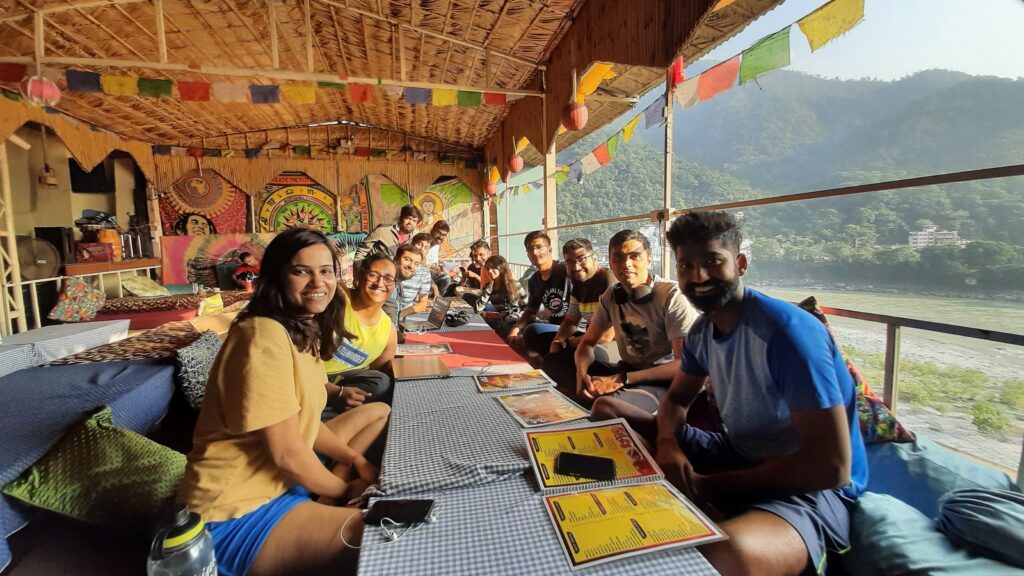
River rafting with hostel friends at Rishikesh, Image Copyright: Ravindra Joisa

Rishikesh is a special place that combines the spiritual with the exciting and the beautiful nature. Rishikesh is an incredible location to visit for a variety of reasons; whether you want to hone your skills in yoga and meditation, learn more about Hinduism, or just take in the breathtaking landscape, this city is not to be missed.

Ganga Aarti at Rishikesh

In recent years, Rishikesh has also become a hotspot for music and festivals, particularly the yearly Ganga Aarti and the International Yoga Festival. Both of these events take place in the Ganga. Explore the city's rich cultural legacy, which includes a large number of historical temples, ashrams, and other cultural and historical attractions. The city also boasts a lot of historical buildings.

Ganga Aarti
Ganga Aarti, Image Copyright: Ravindra Joisa

In addition, tourists may take a swim in the Ganges at one of the numerous ghats (steps going down to the river) or take part in the evening Ganga Aarti ceremony, which is a Hindu religious rite of devotion in which lights are floated down the river. Both of these activities can be done at one of the many ghats.

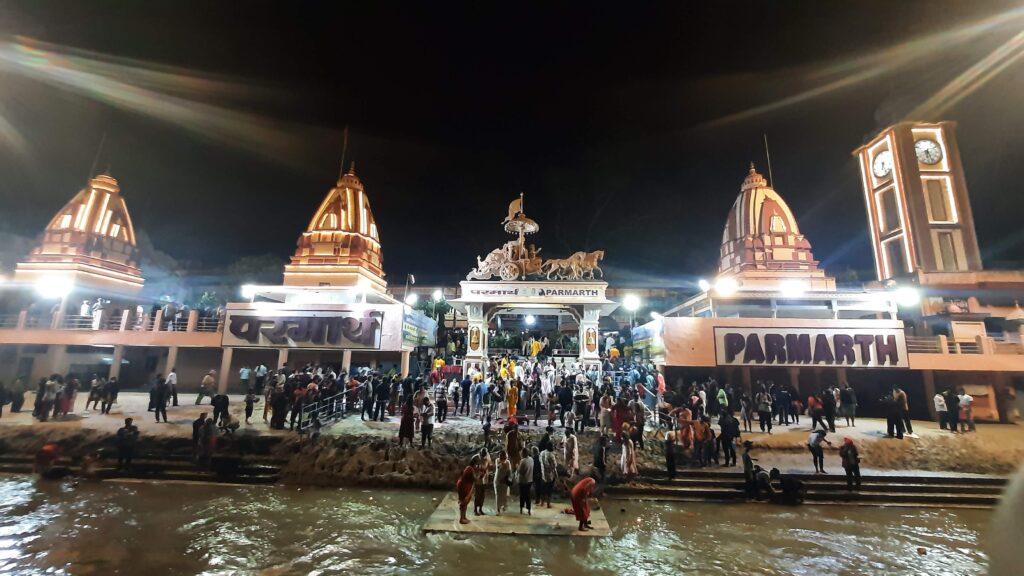
In addition to this, the city is famous for its many temples and shrines, such as the Parmarth Niketan Ashram, which is considered to be one of the most important ashrams in the whole city of Rishikesh. The ashram is home to a stunning temple and a yoga and meditation hall, all of which are open to guests who want to take part in the daily lessons offered in each of these disciplines.

Parmarth ashram
Parmarth ashram, Image Copyright: Ravindra Joisa

Cafes and hostels in Rishikesh

As a result of Rishikesh's status as a popular location for vacationers and budget travelers, there are a great number of cafés and hostels from which to choose. Chotiwala Restaurant, The Little Buddha Cafe, and The Beatles Cafe are three of Rishikesh's most well-known and well-liked eateries and cafes.

The Zostel Rishikesh, The Hosteller, and Backpacker Panda Rishikesh are some of the most well-known hostels in the city of Rishikesh. There are many more hostels these days. In addition, you may search for more possibilities by using internet booking services like Booking.com, Agoda, and Airbnb. This is the starting point for many of the many treks, making it an ideal location for anyone who wishes to go trekking.

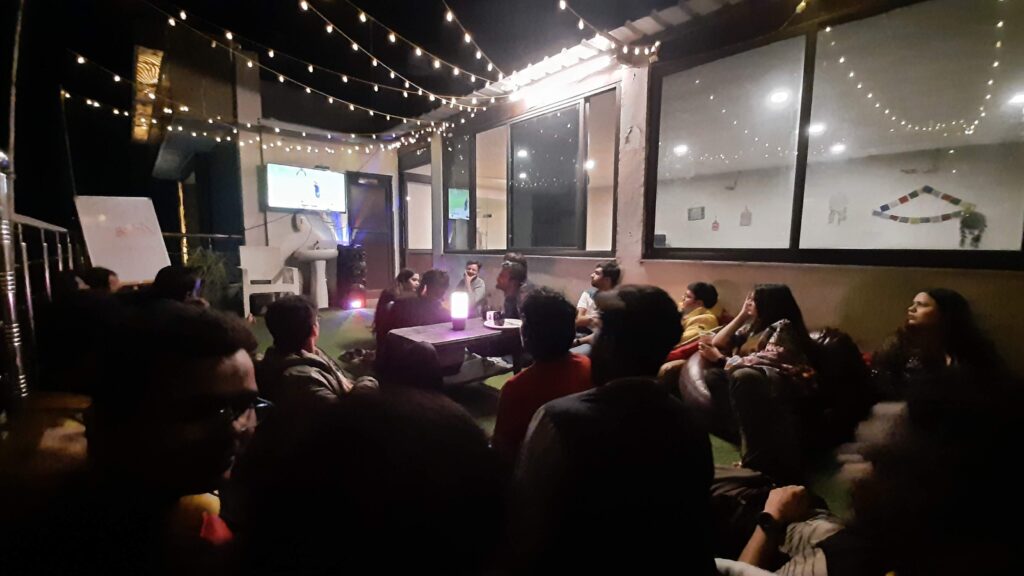
Hostel life at Zostel in Rishikesh
Hostel life at Zostel in Rishikesh, enjoying cricket. Copyright: Ravindra Joisa

Things to do in Rishikesh

  1. Participate in some yoga and meditation sessions at the world-famous Parmarth Niketan Ashram.
  2. Visit the sacred Triveni Ghat and take a bath in the Ganges River.
  3. Pay a visit to the Beatles Ashram and have a look at the graffiti art that has been painted on the walls.
  4. If you want to see tigers and elephants, you should go to Rajaji National Park and look around.
  5. Make a stop at the Neer Garh Waterfall, which is a well-known destination for picnics and swimming.
  6. To see the breathtaking sunset over the Ganges, take a boat trip on the river.
  7. Pay a visit to the Parmeshwar Mahadev Temple, a stunning old structure that may be seen on the banks of the Ganges.
  8. Jumpin Heights is the place to go for bungee jumping, zip-lining, and other exciting adventure activities.
  9. Cross the Ganges on either the Ram Jhula or the Laxman Jhula, two of the most famous iron suspension bridges in the world.
  10. Spend some time browsing the vibrant marketplaces of Rishikesh and picking up some mementos along the way.
  11. Make your way up to the hilltop Kunjapuri temple, which is also the best spot to see the dawn and sunset. In addition to that, it is the highest peak in the surrounding region.
With solo travel friends who were working remotely.

Things to know

  1. If you want to order meals, you will find that things are more costly on the major streets and in hostels. It is recommended that you take a stroll along the river or cross the Julha in order to access a large number of eateries in the area.
  2. You can go about Rishikesh with the assistance of bike rentals that are available there. Even cheaper alternatives, like scooters, are readily accessible.
  3. If you want to go about the city, you may use one of the shared autorickshaws that are accessible here.
  4. On the other bank of the river, in the vicinity of Ram and Lakshman Julha, there is a route that is less congested and runs directly beside the river.
bank of the river ganga at Rishikesh
Bank of the river Ganga

5. Spend some time at one of the riverbank cafés.

6. A laundry service and a fast-drying facility are available for use. In most cases, it will take between four and six hours.

7. If you go river rafting with a large group, you'll be able to save money on the experience. You should have this conversation in the hostel where you are staying so that other guests there may participate. When working in a group, labor costs are reduced.

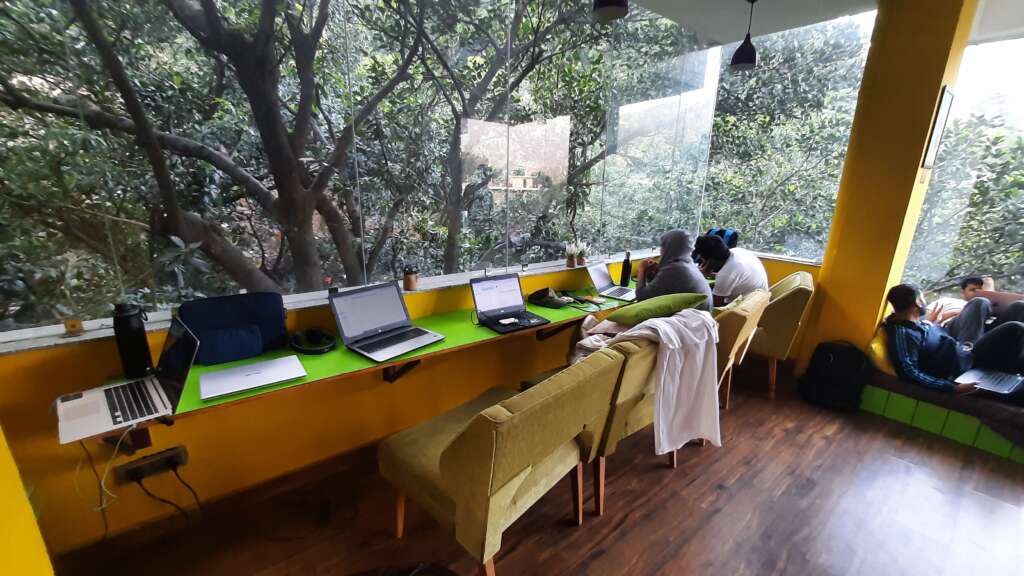
8. Most of the hostels and cafes have Wi-Fi with good speed. You will find many people working remotely.

9. The cheapest way to stay here is to stay in a dormitory. Booking for the week will work out cheaper as most of the hostels offer package discounts. Check the hostel's website for packages instead of a common hotel booking website.

Remote working option at Zostel in Rishikesh

In conclusion, Rishikesh is a city that caters to the needs and interests of its inhabitants. Rishikesh provides a one-of-a-kind and amazing experience for travelers, regardless of whether they are looking for a tranquil holiday, a spiritual retreat, or an exciting new encounter.

Rishikesh is certainly a location that should not be skipped due to the plethora of things to do and sights to see, as well as its stunning natural surroundings and illustrious cultural history. I hope you enjoyed reading this blog post. Buy me a coffee to support my work, or you can go to my store to buy some of my images. Also, do not forget to join my FriendZone by signing up for my newsletter. Consider subscribing to my YouTube channel.

Sandakphu Trek | An adventurous 7 days hike with spectacular views

The Sandakphu Trek is a 7-day trek in West Bengal, India, that takes trekkers through the enchanting landscape of the region. The trek offers spectacular views of the surrounding mountains, including some of the highest peaks in the world, such as Kanchenjunga and Everest.

Sandakphu trek - Aal campsite

The Sandakphu Trek is unique in every way. It gives a stunning sight of four of the highest peaks in the world. However, it is also a journey where the natural world and culture coexist. Greater still is the "Sleeping Buddha" to your right. Eerie similarities exist between the massif and a sleeping human shape. The most notable peak in this oddly formed massif is Kanchenjunga, the third-highest mountain in the world. A view of these three magnificent peaks combined is a once-in-a-lifetime opportunity. The sleeping Buddha greets you as you rise from our Sabalgram campground. Trekkers frequently cry when they see the scenery.

The ideal location to see sunrises and sunsets is the Sandakphu hike. In addition, hikers should be prepared for windy circumstances and huddle with a cup of soup beside a brazier. While hiking through forests and meadows, the walk also provides the chance to learn about local legends.

Of course, Singalila National Park is popular among our trekkers. There are some of the densest bamboo and rhododendron woods in the world. These woodlands are breathtaking. Walking beneath a canopy of bamboo trees is a unique sensation. The tall bamboo stalks soar above, forming a natural canopy that diffuses sunlight into a delicate green radiance. The dense and crowded bamboo stalks give off the impression of entering a tunnel and entering a mysterious, mystical realm.

A very magnificent moment is created each spring when rhododendrons blossom, covering the slope in dazzling blooms of pink, crimson, scarlet, and white flowers. While hiking through these woodlands, you could see red pandas. On this walk, it's unlikely but not impossible to see a Himalayan black bear, a red panda, or a clouded leopard. We also anticipate the Indo-Nepali culture of the journey. Our hike route often enters and exits Nepal. At some of our sites, our sleeping tents are in India, while our kitchen tents are in Nepal.

How do I reach Srikhola or Sepi?

A typical trip in a hill station is the journey from Bagdogra Airport/NJP Railway Station to Sepi. The roads go past quaint hillside towns and the well-known Darjeeling tea gardens. Enjoy the scenery as you begin to ascend from your taxi. I would advise arriving a few days early and taking advantage of your stay in Darjelling, as I did. You may take a shared cab from Darjelling to Manyabanjan, but I decided to visit the village of Kopidhara instead, where I had lunch.

https://youtu.be/RLU0LDX7hcg

Here, you may enjoy some real momos (dumplings) and thukpa (noodle soup). Nearly every other restaurant along this road serves these meals. You may find more traditional delicacies like Gandruk, Churpi (Yak Cheese), Ningro, and the well-known chili Dalle Khursani at a few teahouses. After lunch, the taxi continues uphill to Srikhola, or Sepi. You'll pass via Sukhiapokhri, Dhotrey, and Rimbik on the route. These are all quite lovely towns that fit in with the peaceful surroundings, remote from the busy city life. These places are well connected and an ideal place if you want to work remotely.

Srikhola bridge

Srikhola is a site with several areas that are covered in tree groves, moss-covered rock walls, and ferns that grow out of every crack and crevice.
Human habitation bestows high and low on the landscape as the Srikhola spring runs through the community. There is a suspension bridge to cross, and the area is beautiful enough to be included on postcards for tourists. If this doesn't give the location enough personality, several locations, including the trekker's hut building, are said to be haunted.

Home stay at Srikhola
Enjoying the view at Srikhola next to the river.

On this day, if you arrive early, explore Srikhola and take some time to relax by the creek and the suspension bridge. The feeling of strolling on this suspension bridge is really pleasant, with the prayer flags flapping in the breeze. Take pleasure in the little tremors as you pass this bridge. Learn from your guide about the five components of these prayer flags. Just beyond the suspension bridge, which serves as both a marker and the beginning of the real hike, sits Srikhola. Rest well in the cottage beside the stream, where you may hear the sound of the water flowing all night.

Trek from Srikhola to Samanden

It's time to lace up your boots and set off on your adventure after a restful night at the riverside cottage in Srikhola. You may get some exercise for the day by walking approximately 3.5 kilometers to Ramam. Up until Ramam, there is a manmade road that meanders past a number of homes and step-cut fields on each side of the road. However, as you go along the road, these start to diminish. You can locate a waterfall as you climb the slope. Keep in mind that landslides frequently occur in this area during the monsoon.

A short while further, you arrive at a tiny clearing of the government school grounds, surrounded by dense pine trees that foreshadow the remainder of the path. You enter the woodlands just across the clearing, and an emerald glow envelopes you right away. You entirely travel through a deep forest over the next several kilometers until you get to a bridge. There are stone benches along the route that are inscribed with the names of the townspeople who have since passed away. The wonderful idea behind this is that by giving trail users a place to rest, these individuals who have passed away continue to serve the community.

https://youtu.be/eAoZmR9zkU0

Samanden, the mini Swiss

The path then gradually ascends until you reach Samanden, a sizable open area with a gently sloping landscape scattered with farm fields and wooden cottages. This location is just as picturesque as the Swiss Alps communities. Large pine trees surround the huts, which have Victorian-style architecture. You spend the night in one of these huts and are shown really kind hospitality. Before going to bed, take in the tranquility and simplicity of this location in the middle of a field of corn, wishing you had a modest hut in this adorable little community.

https://youtu.be/2Siwi6SJQc0
The place is known by the name Mini Switzerland

We toured Samanden hamlet the following morning in the early hours before hiking another kilometer to Gorkey, another adjacent village. Another lovely campground where you can spend the night is this one. On the way, in the heart of the community, there is a little waterfall. The place is well known for stargazing, which is ideal if you are into astrophotography.

https://youtu.be/GTxVSdepF2g

Trek from Samanden to Molley

The whole way from Samanden to Molley is a steep climb, so today is going to be hard. Today is the day you work out the hardest and for the longest time. The beautiful path, on the other hand, makes you feel better and encourages you to keep going. Today is the day to find out if there is magic in the woods. Today, you will hike through three different types of wood, each different from the others.

You go up almost 3,000 feet. In mountain terms, that's a big gain in elevation. Besides that, there are no water sources along the way. The only way to get to Molley is through a thick bush. To begin the trail, you will go through a part of the forest that is mostly made up of pine and oak trees. The green oak starts out first, and as you go higher, it gives way to the golden oak. As a result of being lower than most woods, there is a good chance that you will come across some rare Himalayan wildlife.

Red alert, bad weather and this was our campsite at Samanden.

Asian black bears are known to live in these woods, and some hikers have even gotten very close to them. The moon-shaped patch of white hair on their chest makes them easy to spot. They are usually not mean, and if you get too close, they will move out of the way.
If you ever see a mother bear with her kids, you should stay still and keep your distance, or slowly back away until she goes her way. There are also other wild animals in the area, but you are less likely to see them as you go higher up. In addition to animals, these woods are home to many types of birds.

The dog followed us on all the days until Sandakphu. Trekkers are crossing the bamboo forest.

As you go further, you'll also go through thick bamboo woods. On either side of the path are groves of bamboo. There are places where the bamboo forest is so thick that you can only see a few meters into the bush.

From the ground up, all you can see are green sticks that arch over the path. You might see the shyest animal that lives only in the Himalayas, the Red Panda, in these woods if you're lucky. The red panda is rare and hard to find. They look for food in these woods because bamboo shoots are mostly what they eat. If they are nearby, you need to keep your eyes open and walk as quietly as possible so you don't scare them away. Being able to see them in their natural environment is one of the best things you can do and then take back with you.

As you walk through the bush, you can see a lot of different-colored mushrooms and plants. You'll need 7–8 people just to go around the trees' stems, which are so tall and wide.
After a few hours, the forest changes into one with lots of bamboo trees. Even here, the forest is so full of trees that the sun barely reaches the ground. After a few paths that go up and down hills, the rhododendron belt starts.

https://youtu.be/KhLW5PnznAQ

You finally come out of the forest after walking through it all day. You will need to walk another 200 meters to get to your camping spot near Molley. Where you left off in the bush, the camping at Molley is very different from it. It has no plants at all and is where the track starts in the real mountain fields.

You can get some snacks at Molley's bush hut. You have a full dinner and then sleep in tents here for the night or in the government guest house. There will be times when you think back on the exciting adventure you had during the day. To see the alpenglow on Kanchenjunga, walk 500 meters toward Sabargram from Molley.

Leaking roof, and that's why the bucket We were here for 2 days because of a red alert and heavy rain.

Trek from Molley to Sabargram or Ahal Camp

Today you will hike above the trees and reach the ridge. If the weather is good, you will be able to see the world's four largest peaks. From Molley to Phalut, the road is 6 km long and goes straight. On the left, you can almost touch Nepal. It will take you about two and a half hours to finish this. Over the course of about 15 minutes, there are a number of gentle descents, high ascents, and level field walks. After this, you'll walk across a flat field for half a kilometer and then climb steeply for one kilometer. You can get around this by cutting corners.

https://youtu.be/-ZUcP3AEKUs
Trek from Molley to Ahal camp, excluding Phalut

The locals call the hikers' hut Phalut Bungla. Keep an eye out for it as you go. From here, it will take about thirty minutes of steady climbing to get to Phalut.

The trail has one of the best views of the "Sleeping Buddha," which is the group of hills around Kanchenjunga called the Kanchenjunga range. From the left, you can see Kumbhakarna, Kanchenjunga, and Simvo in the distance. South Kabru, North Kabru, Kabru Forked, Goecha, and the hill of Pandim just ahead of Simvo are all below Kanchenjunga.

The Goecha La is the valley between the ridges of Goecha and Pandim. It is a famous and beautiful walk in Sikkim. It's amazing to see how these mountains, which were made billions of years ago, look almost exactly like the awakened one himself, Buddha, while he is sleeping.

When you see the "Sleeping Buddha" for the first time, you feel like you're in a spiritual dream. It leaves an impression on your mind and stays there. When you get to Phalut, the viewpoint is on the hill to your left. Get there early to get a great view of all the mountains and hills in the area. You may camp at Sabargram or continue further and camp at Ahal or Aal Camp, where there is a small shop and a view point.

Trek from Sabargram or Aal camp to Sandakphu

In the event that you slept at Sabargram camp instead of Aal camp and rested there, you will wake up to a bright and fresh morning. Your legs might be tired from all the worry of the last two days. At Sabargram, however, you should not miss the morning because you can see the sun rise above the clouds.

Junction where there is a diversion to Phalut

You'll be ready to go after breakfast and morning tea. As you get ready for the trip today, the crisp, cold morning air fills your breath. The day will be long, but not too stressful. This day's trip starts where the last one did, but instead of going toward Phalut, you walk away from it. The trail goes all the way to the top of Sandakphu along the Singalila mountain, which is right on the border between India and Nepal. There are a number of worn-out roads that cross the land. They all look pretty much the same. The path that leads to Sandakphu is the clearest and most reasonable.

When it comes to unique views, the tracks are the best part of this trip. There are tall pine trees all over the landscape. Some of them look like they've been cursed and mummified, with pointy tips and few or no branches. Some appear to have received lightning strikes and internal burns. In April and May, the path has a huge number of rhododendrons that are in full bloom. Local cow farmers built and occupied small wooden huts along the path. They add to the peacefulness of the area. The Buddha, who is said to sleep forever, is in the background of the scene. It feels like you're walking through a picture with depth.

Kaly Pokhry pond

You will reach a small pond called Kaly Pokhry about halfway through the trail. There is also a trekker's hut there. You'll eat lunch here, which is called Thokum. This is not the same as Kali Pokhri, though, which is a different way to get to Sandakphu from Manebhanjan. You can take a break here for a while before going on. Some paths go into Nepal. There are also lots of rhodo bushes along the path. In April and May, they bloom in white and pink. Rhododendron red flowers are good for you, but rhododendron white and pink flowers are harmful and should not be eaten.

https://youtu.be/GkJ0vLxbHe4
Aal campsite and the 360-degree view early in the morning.

To keep things simple, remember that India is on the left side of the path you began going on. There is also a campsite at Aal. If you don't want to go to Phalut, you can choose to stay at Aal Camp the day before. Early in the morning and late at night, the view from Aal Camp is breathtaking.

Aal is 1 km ahead of Sandakphu. It shouldn't take more than 20 minutes to get here. The view point is on top of a small hill, just 100 meters before the group of houses and shelters at Sandakphu. Your camp is in Sandakphu. You need to see the sunset from the top of Sandakphu, so you can leave your bags at the camping spot and walk up to the peak. In the evening, the rising clouds from the hillsides make for a beautiful view. It gets very cold very quickly after dark. But go outside at night and look at the Milky Way and the other galaxies, nebulas, and planets that are close by.

Trek from Sandakphu or Aal camp to Gurdum

While the sun is rising, you get up early to enjoy stunning views of the surrounding area. If you want to see the mountaintops light up with the first rays of sunlight, you should be there. A crimson-gold color lights up the faraway hills, which is a beautiful sight. In the Himalayas, it's one of the most beautiful natural sights you can see.

https://youtu.be/6WgamjBgZNo

This spot's 180-degree views of one of the world's most sought-after landscapes are its main draw. In the west, you can see Himalayan peaks such as Makalu, Lhotse, Everest, Nuptse, Baruntse, Chamling, Chomo Lonzo, Machapuchare, and others in the Annapurna range. In the north, three sister peaks stand tall, and in front of you is the Sleeping Buddha. In the east, you can see Bhutan's highest hills. Chomolhari, the country's highest peak, stands out from the rest.

You keep going on the path after taking pictures and saving them on your memory cards and cameras. As a general rule, you should start going down on the left path at the split you see after the Sherpa Chalet Hotel and the Sunrise Hotel. You don't have to go down the right road that leads to Kalipokhri. The trail goes over a hill and straight to Gurdum from here. Going up and down a few small hills with easy slopes takes about two hours. When you get to a small pond, you can eat lunch and take a break. You will see three stupas on your way to Gurdum. We will stop for a break at one of them.

Next, you'll go down all the way to Gurdum, which is about 3.5 to 4 km away and takes another 1.5 to 2 hours. As you get closer to Gurdum, you'll start to see bamboo plants again, which will let you know that you're almost there.

Gurdum is another beautiful village like Samanden. It has a wonderful rural charm and is a great place to finally relax and rest. The local Nepalese residents have set up a homestay for you to stay at. This is known as Gurdum Homestay. The hosts are friendly and warm, which makes our trekkers love staying at this homestay. While the service at these homestays isn't the best, it's better than a lot of commercial hotels.

Our team of trekkers, organized by Indiahikes

Should you be able to work from home, this is a great spot to connect because it has a strong 4G connection and beautiful views, which I'm sure you will enjoy.

Trek from Gurdum to Sepi or Srikhola

The following morning, there will be a full drop through the same kind of greenery as the second day of the trip. You started your walk in the same place where you are now. It takes about 4 km to get there, and you'll get there around noon.

https://youtu.be/ly-nOomi8WA

The closer you get to the Sepi suspension bridge, the more town homes you will see along the way. Different roads come together like streams that flow into one big river and lead to the Sepi or Srikhola Bridge. You eat lunch when you get there and then leave for Bagdogra airport or the NJP train station.

On the way to Airport

From the Himalayas to the India's Southern Hill station, discover the 3 days of Top Secret Cycling in Munnar Tea Estate Hideaways.

How difficult is the Sandakphu Trek?

Depending on how hard you want it to be, the Sandakphu Trek is somewhere in the middle. From Sepi, which is 6,400 feet above sea level, you'll climb to Sandakphu, which is 11,930 feet above sea level. Molley and Phalut are also about the same height. From Phalut, the trail goes down steeply to Samanden at 7,760 feet and then to Sepi at 6,400 feet, where the hike ends.

There aren't any big rises or descents on the Sandakphu trek every day. The trip, on the other hand, makes you walk a lot every day. The walk takes about 7 to 8 hours every day, and some days it takes even longer. You walk more than 11 km most days of the trip. It takes a lot of strength to do this. During wins, when winds are strong and stay strong, this can get harder.

This is the right thing to do. You should make sure that your hiking shoes fit well because you will be on your feet for a long time and over long distances. Break them in at least two to three weeks before your trip. You also need good support for your ankles. That being said, make sure your shoes are soft and give your feet room to breathe.

The Sandakphu trek distance is 47 km, and it is a must-do trek for those who love trekking. The trek offers spectacular views of the surrounding mountains and an opportunity to explore the enchanting landscape of the region. The trek is moderately difficult and requires a certain level of fitness. It is best to go on the trek between October and April.

Even though this is a DIY trek, you can book your hiking tickets with some of the leading trek organizers, like Indiahikes, Trek the Himalayas, or YHAI. You can go solo until the basecamp and then with these groups. So, that was my experience of hiking to this place. Hope you enjoyed reading this blog post. Buy me a coffee to support my work or you can go to my store to buy some of my images. Also, do not forget to join my FriendZone by signing up for my newsletter. Consider subscribing to my YouTube channel.

Unleash Your Creative Potential: Exploring Adobe Express for Beginner Photographers with Ease and Confidence

Are you an amateur photographer looking to step up your game, but can’t afford fancy editing software? Adobe Express could be the answer you're looking for. This budget-friendly alternative to Photoshop is the perfect way for any beginner photographer to enhance their photos and videos without previous design experience. The best part? You can choose from a variety of free tools or a premium option, meaning you can learn how to navigate the app without having to pay an exorbitant fee.

With an array of features and functionalities, this remarkable software has become a go-to resource for graphic designers, photographers, and visual artists alike. In this comprehensive guide, we will delve deep into the world of Adobe Express, exploring its capabilities, tips, and tricks to help you maximize your creative potential.

Photo via Pexels

What is Adobe Express?

Adobe Express is a free mobile app from Adobe that allows users to create stunning social media posts, graphics, and videos with ease. It is compatible with both Android and iOS devices and offers access to thousands of tools, tutorials, and resources for anyone interested in photography and video editing. Similar to Photoshop, Adobe Express is much more user-friendly and doesn't require the time commitment that Photoshop does.

Access Thousands of Tools

Adobe Express provides users with access to hundreds of fonts, filters, effects, overlays, frames, stickers, and more for creating beautiful images. There are also tutorials available that will help beginners get started with the basics of image editing so they can make the most out of their photos. Additionally, users can also explore additional content from community members around the world who are sharing their own tips and tricks for creating stunning visuals.

Unleashing Your Creative Potential

1. Intuitive User Interface

One of the standout features of Adobe Express is its intuitive user interface. Designed with simplicity in mind, this interface allows you to navigate seamlessly through the various tools and functions. With just a few clicks, you can access an extensive library of brushes, filters, and effects, making it effortless to give your creative projects a unique flair.

2. Powerful Editing Tools

Adobe Express offers a plethora of powerful editing tools to enhance your images and designs. From basic adjustments, such as cropping and resizing, to advanced retouching features like spot healing and content-aware fill, you'll find everything you need to bring out the best in your visuals. The software also supports non-destructive editing, ensuring that your original files remain intact throughout the editing process.

3. Extensive Brush Library

Brushes play a crucial role in digital art, and Adobe Express delivers an extensive library of brushes to cater to all your artistic endeavors. Whether you're looking for realistic watercolor brushes, textured pencils, or intricate patterns, you'll find a wide selection to choose from. The software also allows you to import custom brushes, giving you limitless possibilities to explore.

4. Seamless Integration

Adobe Express seamlessly integrates with other Adobe Creative Cloud applications, allowing you to streamline your workflow. Whether you want to import assets from Adobe Photoshop or export your creations to Adobe Illustrator, the software ensures smooth compatibility across the Adobe ecosystem. This integration empowers you to work efficiently and harness the full potential of multiple creative tools.

Edit Photos and Videos

Adobe Express also provides powerful tools such as curve adjustment options, which allow you to enhance shadows/highlights or adjust the color balance in order to give your photos an extra pop. You can also edit videos using basic trimming tools and add text overlays or music from the library provided within the app itself. This makes it easy to create stunning visuals even if you don’t have any video editing experience.

Create Social Media Posts

With just a few taps, the app makes it easy to turn your photos into eye-catching social media shares. There are dozens of themes made just for Instagram stories, Facebook posts, or Twitter ads. Users can easily make images that look like they were made by professionals. You will not need any past design skills or experience to master editing. You can also change the colors and backgrounds of each style. Also, add text layers to make your post stand out even more.

Tips and Tricks for Optimal Usage

To further enhance your experience with Adobe Express, here are some valuable tips and tricks:

1. Customization

Explore the vast range of customization options available in Adobe Express. Tailor the interface, brushes, and shortcuts to suit your preferences. By personalizing your workspace, you can optimize your workflow and work more efficiently.

2. Utilize Keyboard Shortcuts

Save time and increase productivity by mastering the keyboard shortcuts in Adobe Express. Familiarize yourself with commonly used shortcuts for tasks like selecting tools, navigating layers, and applying filters. This will significantly speed up your workflow and allow you to focus more on unleashing your creativity.

3. Experiment with Filters and Effects

Don't be afraid to experiment with the diverse filters and effects offered by Adobe Express. Let your creativity soar by applying different combinations to your designs. Play around with adjustments like saturation, hue, and contrast to achieve unique and captivating visual effects.

4. Learn from Online Communities

Join online communities and forums dedicated to Adobe Express. Engage with fellow artists, share your work, and seek inspiration. Learning from others and exchanging ideas can unlock new possibilities and help you refine your skills.

Create A Beautiful Portfolio

Indian Wedding Candid Shots by Ravindra Joisa - Professional photographer

One of the best features of Adobe Express is the ability to create a beautiful portfolio of all your best work in one place. Easily share your creations with friends/family/clients via email or social media platforms like Pinterest or Instagram so they can appreciate all your hard work without having to download extra software. Plus, you can also save all projects directly in the cloud, so they’ll always be available no matter where life takes you.

With Adobe Express, amateur photographers get access not only to photo and video editing tools but other great features as well, such as being able to quickly create social media posts and build beautiful portfolios showcasing their best work right from their phone. Whether you're just starting out or want to start building a freelance business, Adobe Express is a useful tool that's easy to use.

Conclusion

Adobe Express is a game-changer when it comes to digital art, design, and photo editing. Its vast array of tools, intuitive interface, and seamless integration with other Adobe Creative Cloud applications make it indispensable software for creative professionals. By utilizing the tips and tricks shared in this guide, you'll be well-equipped to unleash your creativity and outshine the competition.