Sandakphu Trek | An adventurous 7 days hike with spectacular views

The Sandakphu Trek is a 7-day trek in West Bengal, India, that takes trekkers through the enchanting landscape of the region. The trek offers spectacular views of the surrounding mountains, including some of the highest peaks in the world, such as Kanchenjunga and Everest.

Sandakphu trek - Aal campsite

The Sandakphu Trek is unique in every way. It gives a stunning sight of four of the highest peaks in the world. However, it is also a journey where the natural world and culture coexist. Greater still is the "Sleeping Buddha" to your right. Eerie similarities exist between the massif and a sleeping human shape. The most notable peak in this oddly formed massif is Kanchenjunga, the third-highest mountain in the world. A view of these three magnificent peaks combined is a once-in-a-lifetime opportunity. The sleeping Buddha greets you as you rise from our Sabalgram campground. Trekkers frequently cry when they see the scenery.

The ideal location to see sunrises and sunsets is the Sandakphu hike. In addition, hikers should be prepared for windy circumstances and huddle with a cup of soup beside a brazier. While hiking through forests and meadows, the walk also provides the chance to learn about local legends.

Of course, Singalila National Park is popular among our trekkers. There are some of the densest bamboo and rhododendron woods in the world. These woodlands are breathtaking. Walking beneath a canopy of bamboo trees is a unique sensation. The tall bamboo stalks soar above, forming a natural canopy that diffuses sunlight into a delicate green radiance. The dense and crowded bamboo stalks give off the impression of entering a tunnel and entering a mysterious, mystical realm.

A very magnificent moment is created each spring when rhododendrons blossom, covering the slope in dazzling blooms of pink, crimson, scarlet, and white flowers. While hiking through these woodlands, you could see red pandas. On this walk, it's unlikely but not impossible to see a Himalayan black bear, a red panda, or a clouded leopard. We also anticipate the Indo-Nepali culture of the journey. Our hike route often enters and exits Nepal. At some of our sites, our sleeping tents are in India, while our kitchen tents are in Nepal.

How do I reach Srikhola or Sepi?

A typical trip in a hill station is the journey from Bagdogra Airport/NJP Railway Station to Sepi. The roads go past quaint hillside towns and the well-known Darjeeling tea gardens. Enjoy the scenery as you begin to ascend from your taxi. I would advise arriving a few days early and taking advantage of your stay in Darjelling, as I did. You may take a shared cab from Darjelling to Manyabanjan, but I decided to visit the village of Kopidhara instead, where I had lunch.

https://youtu.be/RLU0LDX7hcg

Here, you may enjoy some real momos (dumplings) and thukpa (noodle soup). Nearly every other restaurant along this road serves these meals. You may find more traditional delicacies like Gandruk, Churpi (Yak Cheese), Ningro, and the well-known chili Dalle Khursani at a few teahouses. After lunch, the taxi continues uphill to Srikhola, or Sepi. You'll pass via Sukhiapokhri, Dhotrey, and Rimbik on the route. These are all quite lovely towns that fit in with the peaceful surroundings, remote from the busy city life. These places are well connected and an ideal place if you want to work remotely.

Srikhola bridge

Srikhola is a site with several areas that are covered in tree groves, moss-covered rock walls, and ferns that grow out of every crack and crevice.
Human habitation bestows high and low on the landscape as the Srikhola spring runs through the community. There is a suspension bridge to cross, and the area is beautiful enough to be included on postcards for tourists. If this doesn't give the location enough personality, several locations, including the trekker's hut building, are said to be haunted.

Home stay at Srikhola
Enjoying the view at Srikhola next to the river.

On this day, if you arrive early, explore Srikhola and take some time to relax by the creek and the suspension bridge. The feeling of strolling on this suspension bridge is really pleasant, with the prayer flags flapping in the breeze. Take pleasure in the little tremors as you pass this bridge. Learn from your guide about the five components of these prayer flags. Just beyond the suspension bridge, which serves as both a marker and the beginning of the real hike, sits Srikhola. Rest well in the cottage beside the stream, where you may hear the sound of the water flowing all night.

Trek from Srikhola to Samanden

It's time to lace up your boots and set off on your adventure after a restful night at the riverside cottage in Srikhola. You may get some exercise for the day by walking approximately 3.5 kilometers to Ramam. Up until Ramam, there is a manmade road that meanders past a number of homes and step-cut fields on each side of the road. However, as you go along the road, these start to diminish. You can locate a waterfall as you climb the slope. Keep in mind that landslides frequently occur in this area during the monsoon.

A short while further, you arrive at a tiny clearing of the government school grounds, surrounded by dense pine trees that foreshadow the remainder of the path. You enter the woodlands just across the clearing, and an emerald glow envelopes you right away. You entirely travel through a deep forest over the next several kilometers until you get to a bridge. There are stone benches along the route that are inscribed with the names of the townspeople who have since passed away. The wonderful idea behind this is that by giving trail users a place to rest, these individuals who have passed away continue to serve the community.

https://youtu.be/eAoZmR9zkU0

Samanden, the mini Swiss

The path then gradually ascends until you reach Samanden, a sizable open area with a gently sloping landscape scattered with farm fields and wooden cottages. This location is just as picturesque as the Swiss Alps communities. Large pine trees surround the huts, which have Victorian-style architecture. You spend the night in one of these huts and are shown really kind hospitality. Before going to bed, take in the tranquility and simplicity of this location in the middle of a field of corn, wishing you had a modest hut in this adorable little community.

https://youtu.be/2Siwi6SJQc0
The place is known by the name Mini Switzerland

We toured Samanden hamlet the following morning in the early hours before hiking another kilometer to Gorkey, another adjacent village. Another lovely campground where you can spend the night is this one. On the way, in the heart of the community, there is a little waterfall. The place is well known for stargazing, which is ideal if you are into astrophotography.

https://youtu.be/GTxVSdepF2g

Trek from Samanden to Molley

The whole way from Samanden to Molley is a steep climb, so today is going to be hard. Today is the day you work out the hardest and for the longest time. The beautiful path, on the other hand, makes you feel better and encourages you to keep going. Today is the day to find out if there is magic in the woods. Today, you will hike through three different types of wood, each different from the others.

You go up almost 3,000 feet. In mountain terms, that's a big gain in elevation. Besides that, there are no water sources along the way. The only way to get to Molley is through a thick bush. To begin the trail, you will go through a part of the forest that is mostly made up of pine and oak trees. The green oak starts out first, and as you go higher, it gives way to the golden oak. As a result of being lower than most woods, there is a good chance that you will come across some rare Himalayan wildlife.

Red alert, bad weather and this was our campsite at Samanden.

Asian black bears are known to live in these woods, and some hikers have even gotten very close to them. The moon-shaped patch of white hair on their chest makes them easy to spot. They are usually not mean, and if you get too close, they will move out of the way.
If you ever see a mother bear with her kids, you should stay still and keep your distance, or slowly back away until she goes her way. There are also other wild animals in the area, but you are less likely to see them as you go higher up. In addition to animals, these woods are home to many types of birds.

The dog followed us on all the days until Sandakphu. Trekkers are crossing the bamboo forest.

As you go further, you'll also go through thick bamboo woods. On either side of the path are groves of bamboo. There are places where the bamboo forest is so thick that you can only see a few meters into the bush.

From the ground up, all you can see are green sticks that arch over the path. You might see the shyest animal that lives only in the Himalayas, the Red Panda, in these woods if you're lucky. The red panda is rare and hard to find. They look for food in these woods because bamboo shoots are mostly what they eat. If they are nearby, you need to keep your eyes open and walk as quietly as possible so you don't scare them away. Being able to see them in their natural environment is one of the best things you can do and then take back with you.

As you walk through the bush, you can see a lot of different-colored mushrooms and plants. You'll need 7–8 people just to go around the trees' stems, which are so tall and wide.
After a few hours, the forest changes into one with lots of bamboo trees. Even here, the forest is so full of trees that the sun barely reaches the ground. After a few paths that go up and down hills, the rhododendron belt starts.

https://youtu.be/KhLW5PnznAQ

You finally come out of the forest after walking through it all day. You will need to walk another 200 meters to get to your camping spot near Molley. Where you left off in the bush, the camping at Molley is very different from it. It has no plants at all and is where the track starts in the real mountain fields.

You can get some snacks at Molley's bush hut. You have a full dinner and then sleep in tents here for the night or in the government guest house. There will be times when you think back on the exciting adventure you had during the day. To see the alpenglow on Kanchenjunga, walk 500 meters toward Sabargram from Molley.

Leaking roof, and that's why the bucket We were here for 2 days because of a red alert and heavy rain.

Trek from Molley to Sabargram or Ahal Camp

Today you will hike above the trees and reach the ridge. If the weather is good, you will be able to see the world's four largest peaks. From Molley to Phalut, the road is 6 km long and goes straight. On the left, you can almost touch Nepal. It will take you about two and a half hours to finish this. Over the course of about 15 minutes, there are a number of gentle descents, high ascents, and level field walks. After this, you'll walk across a flat field for half a kilometer and then climb steeply for one kilometer. You can get around this by cutting corners.

https://youtu.be/-ZUcP3AEKUs
Trek from Molley to Ahal camp, excluding Phalut

The locals call the hikers' hut Phalut Bungla. Keep an eye out for it as you go. From here, it will take about thirty minutes of steady climbing to get to Phalut.

The trail has one of the best views of the "Sleeping Buddha," which is the group of hills around Kanchenjunga called the Kanchenjunga range. From the left, you can see Kumbhakarna, Kanchenjunga, and Simvo in the distance. South Kabru, North Kabru, Kabru Forked, Goecha, and the hill of Pandim just ahead of Simvo are all below Kanchenjunga.

The Goecha La is the valley between the ridges of Goecha and Pandim. It is a famous and beautiful walk in Sikkim. It's amazing to see how these mountains, which were made billions of years ago, look almost exactly like the awakened one himself, Buddha, while he is sleeping.

When you see the "Sleeping Buddha" for the first time, you feel like you're in a spiritual dream. It leaves an impression on your mind and stays there. When you get to Phalut, the viewpoint is on the hill to your left. Get there early to get a great view of all the mountains and hills in the area. You may camp at Sabargram or continue further and camp at Ahal or Aal Camp, where there is a small shop and a view point.

Trek from Sabargram or Aal camp to Sandakphu

In the event that you slept at Sabargram camp instead of Aal camp and rested there, you will wake up to a bright and fresh morning. Your legs might be tired from all the worry of the last two days. At Sabargram, however, you should not miss the morning because you can see the sun rise above the clouds.

Junction where there is a diversion to Phalut

You'll be ready to go after breakfast and morning tea. As you get ready for the trip today, the crisp, cold morning air fills your breath. The day will be long, but not too stressful. This day's trip starts where the last one did, but instead of going toward Phalut, you walk away from it. The trail goes all the way to the top of Sandakphu along the Singalila mountain, which is right on the border between India and Nepal. There are a number of worn-out roads that cross the land. They all look pretty much the same. The path that leads to Sandakphu is the clearest and most reasonable.

When it comes to unique views, the tracks are the best part of this trip. There are tall pine trees all over the landscape. Some of them look like they've been cursed and mummified, with pointy tips and few or no branches. Some appear to have received lightning strikes and internal burns. In April and May, the path has a huge number of rhododendrons that are in full bloom. Local cow farmers built and occupied small wooden huts along the path. They add to the peacefulness of the area. The Buddha, who is said to sleep forever, is in the background of the scene. It feels like you're walking through a picture with depth.

Kaly Pokhry pond

You will reach a small pond called Kaly Pokhry about halfway through the trail. There is also a trekker's hut there. You'll eat lunch here, which is called Thokum. This is not the same as Kali Pokhri, though, which is a different way to get to Sandakphu from Manebhanjan. You can take a break here for a while before going on. Some paths go into Nepal. There are also lots of rhodo bushes along the path. In April and May, they bloom in white and pink. Rhododendron red flowers are good for you, but rhododendron white and pink flowers are harmful and should not be eaten.

https://youtu.be/GkJ0vLxbHe4
Aal campsite and the 360-degree view early in the morning.

To keep things simple, remember that India is on the left side of the path you began going on. There is also a campsite at Aal. If you don't want to go to Phalut, you can choose to stay at Aal Camp the day before. Early in the morning and late at night, the view from Aal Camp is breathtaking.

Aal is 1 km ahead of Sandakphu. It shouldn't take more than 20 minutes to get here. The view point is on top of a small hill, just 100 meters before the group of houses and shelters at Sandakphu. Your camp is in Sandakphu. You need to see the sunset from the top of Sandakphu, so you can leave your bags at the camping spot and walk up to the peak. In the evening, the rising clouds from the hillsides make for a beautiful view. It gets very cold very quickly after dark. But go outside at night and look at the Milky Way and the other galaxies, nebulas, and planets that are close by.

Trek from Sandakphu or Aal camp to Gurdum

While the sun is rising, you get up early to enjoy stunning views of the surrounding area. If you want to see the mountaintops light up with the first rays of sunlight, you should be there. A crimson-gold color lights up the faraway hills, which is a beautiful sight. In the Himalayas, it's one of the most beautiful natural sights you can see.

https://youtu.be/6WgamjBgZNo

This spot's 180-degree views of one of the world's most sought-after landscapes are its main draw. In the west, you can see Himalayan peaks such as Makalu, Lhotse, Everest, Nuptse, Baruntse, Chamling, Chomo Lonzo, Machapuchare, and others in the Annapurna range. In the north, three sister peaks stand tall, and in front of you is the Sleeping Buddha. In the east, you can see Bhutan's highest hills. Chomolhari, the country's highest peak, stands out from the rest.

You keep going on the path after taking pictures and saving them on your memory cards and cameras. As a general rule, you should start going down on the left path at the split you see after the Sherpa Chalet Hotel and the Sunrise Hotel. You don't have to go down the right road that leads to Kalipokhri. The trail goes over a hill and straight to Gurdum from here. Going up and down a few small hills with easy slopes takes about two hours. When you get to a small pond, you can eat lunch and take a break. You will see three stupas on your way to Gurdum. We will stop for a break at one of them.

Next, you'll go down all the way to Gurdum, which is about 3.5 to 4 km away and takes another 1.5 to 2 hours. As you get closer to Gurdum, you'll start to see bamboo plants again, which will let you know that you're almost there.

Gurdum is another beautiful village like Samanden. It has a wonderful rural charm and is a great place to finally relax and rest. The local Nepalese residents have set up a homestay for you to stay at. This is known as Gurdum Homestay. The hosts are friendly and warm, which makes our trekkers love staying at this homestay. While the service at these homestays isn't the best, it's better than a lot of commercial hotels.

Our team of trekkers, organized by Indiahikes

Should you be able to work from home, this is a great spot to connect because it has a strong 4G connection and beautiful views, which I'm sure you will enjoy.

Trek from Gurdum to Sepi or Srikhola

The following morning, there will be a full drop through the same kind of greenery as the second day of the trip. You started your walk in the same place where you are now. It takes about 4 km to get there, and you'll get there around noon.

https://youtu.be/ly-nOomi8WA

The closer you get to the Sepi suspension bridge, the more town homes you will see along the way. Different roads come together like streams that flow into one big river and lead to the Sepi or Srikhola Bridge. You eat lunch when you get there and then leave for Bagdogra airport or the NJP train station.

On the way to Airport

From the Himalayas to the India's Southern Hill station, discover the 3 days of Top Secret Cycling in Munnar Tea Estate Hideaways.

How difficult is the Sandakphu Trek?

Depending on how hard you want it to be, the Sandakphu Trek is somewhere in the middle. From Sepi, which is 6,400 feet above sea level, you'll climb to Sandakphu, which is 11,930 feet above sea level. Molley and Phalut are also about the same height. From Phalut, the trail goes down steeply to Samanden at 7,760 feet and then to Sepi at 6,400 feet, where the hike ends.

There aren't any big rises or descents on the Sandakphu trek every day. The trip, on the other hand, makes you walk a lot every day. The walk takes about 7 to 8 hours every day, and some days it takes even longer. You walk more than 11 km most days of the trip. It takes a lot of strength to do this. During wins, when winds are strong and stay strong, this can get harder.

This is the right thing to do. You should make sure that your hiking shoes fit well because you will be on your feet for a long time and over long distances. Break them in at least two to three weeks before your trip. You also need good support for your ankles. That being said, make sure your shoes are soft and give your feet room to breathe.

The Sandakphu trek distance is 47 km, and it is a must-do trek for those who love trekking. The trek offers spectacular views of the surrounding mountains and an opportunity to explore the enchanting landscape of the region. The trek is moderately difficult and requires a certain level of fitness. It is best to go on the trek between October and April.

Even though this is a DIY trek, you can book your hiking tickets with some of the leading trek organizers, like Indiahikes, Trek the Himalayas, or YHAI. You can go solo until the basecamp and then with these groups. So, that was my experience of hiking to this place. Hope you enjoyed reading this blog post. Buy me a coffee to support my work or you can go to my store to buy some of my images. Also, do not forget to join my FriendZone by signing up for my newsletter. Consider subscribing to my YouTube channel.

Unleash Your Creative Potential: Exploring Adobe Express for Beginner Photographers with Ease and Confidence

Are you an amateur photographer looking to step up your game, but can’t afford fancy editing software? Adobe Express could be the answer you're looking for. This budget-friendly alternative to Photoshop is the perfect way for any beginner photographer to enhance their photos and videos without previous design experience. The best part? You can choose from a variety of free tools or a premium option, meaning you can learn how to navigate the app without having to pay an exorbitant fee.

With an array of features and functionalities, this remarkable software has become a go-to resource for graphic designers, photographers, and visual artists alike. In this comprehensive guide, we will delve deep into the world of Adobe Express, exploring its capabilities, tips, and tricks to help you maximize your creative potential.

Photo via Pexels

What is Adobe Express?

Adobe Express is a free mobile app from Adobe that allows users to create stunning social media posts, graphics, and videos with ease. It is compatible with both Android and iOS devices and offers access to thousands of tools, tutorials, and resources for anyone interested in photography and video editing. Similar to Photoshop, Adobe Express is much more user-friendly and doesn't require the time commitment that Photoshop does.

Access Thousands of Tools

Adobe Express provides users with access to hundreds of fonts, filters, effects, overlays, frames, stickers, and more for creating beautiful images. There are also tutorials available that will help beginners get started with the basics of image editing so they can make the most out of their photos. Additionally, users can also explore additional content from community members around the world who are sharing their own tips and tricks for creating stunning visuals.

Unleashing Your Creative Potential

1. Intuitive User Interface

One of the standout features of Adobe Express is its intuitive user interface. Designed with simplicity in mind, this interface allows you to navigate seamlessly through the various tools and functions. With just a few clicks, you can access an extensive library of brushes, filters, and effects, making it effortless to give your creative projects a unique flair.

2. Powerful Editing Tools

Adobe Express offers a plethora of powerful editing tools to enhance your images and designs. From basic adjustments, such as cropping and resizing, to advanced retouching features like spot healing and content-aware fill, you'll find everything you need to bring out the best in your visuals. The software also supports non-destructive editing, ensuring that your original files remain intact throughout the editing process.

3. Extensive Brush Library

Brushes play a crucial role in digital art, and Adobe Express delivers an extensive library of brushes to cater to all your artistic endeavors. Whether you're looking for realistic watercolor brushes, textured pencils, or intricate patterns, you'll find a wide selection to choose from. The software also allows you to import custom brushes, giving you limitless possibilities to explore.

4. Seamless Integration

Adobe Express seamlessly integrates with other Adobe Creative Cloud applications, allowing you to streamline your workflow. Whether you want to import assets from Adobe Photoshop or export your creations to Adobe Illustrator, the software ensures smooth compatibility across the Adobe ecosystem. This integration empowers you to work efficiently and harness the full potential of multiple creative tools.

Edit Photos and Videos

Adobe Express also provides powerful tools such as curve adjustment options, which allow you to enhance shadows/highlights or adjust the color balance in order to give your photos an extra pop. You can also edit videos using basic trimming tools and add text overlays or music from the library provided within the app itself. This makes it easy to create stunning visuals even if you don’t have any video editing experience.

Create Social Media Posts

With just a few taps, the app makes it easy to turn your photos into eye-catching social media shares. There are dozens of themes made just for Instagram stories, Facebook posts, or Twitter ads. Users can easily make images that look like they were made by professionals. You will not need any past design skills or experience to master editing. You can also change the colors and backgrounds of each style. Also, add text layers to make your post stand out even more.

Tips and Tricks for Optimal Usage

To further enhance your experience with Adobe Express, here are some valuable tips and tricks:

1. Customization

Explore the vast range of customization options available in Adobe Express. Tailor the interface, brushes, and shortcuts to suit your preferences. By personalizing your workspace, you can optimize your workflow and work more efficiently.

2. Utilize Keyboard Shortcuts

Save time and increase productivity by mastering the keyboard shortcuts in Adobe Express. Familiarize yourself with commonly used shortcuts for tasks like selecting tools, navigating layers, and applying filters. This will significantly speed up your workflow and allow you to focus more on unleashing your creativity.

3. Experiment with Filters and Effects

Don't be afraid to experiment with the diverse filters and effects offered by Adobe Express. Let your creativity soar by applying different combinations to your designs. Play around with adjustments like saturation, hue, and contrast to achieve unique and captivating visual effects.

4. Learn from Online Communities

Join online communities and forums dedicated to Adobe Express. Engage with fellow artists, share your work, and seek inspiration. Learning from others and exchanging ideas can unlock new possibilities and help you refine your skills.

Create A Beautiful Portfolio

Indian Wedding Candid Shots by Ravindra Joisa - Professional photographer

One of the best features of Adobe Express is the ability to create a beautiful portfolio of all your best work in one place. Easily share your creations with friends/family/clients via email or social media platforms like Pinterest or Instagram so they can appreciate all your hard work without having to download extra software. Plus, you can also save all projects directly in the cloud, so they’ll always be available no matter where life takes you.

With Adobe Express, amateur photographers get access not only to photo and video editing tools but other great features as well, such as being able to quickly create social media posts and build beautiful portfolios showcasing their best work right from their phone. Whether you're just starting out or want to start building a freelance business, Adobe Express is a useful tool that's easy to use.

Conclusion

Adobe Express is a game-changer when it comes to digital art, design, and photo editing. Its vast array of tools, intuitive interface, and seamless integration with other Adobe Creative Cloud applications make it indispensable software for creative professionals. By utilizing the tips and tricks shared in this guide, you'll be well-equipped to unleash your creativity and outshine the competition.

Unveiling the Enchanting Beauty of Varkala Beach | A Paradise for Travelers

Varkala Beach, which is located in the southern Indian state of Kerala, is a captivating coastal jewel that draws tourists with its beautiful sands, rough waves, and relaxed attitude. Varkala has a wide range of things to offer, from surfers looking for the perfect wave to yogis seeking inner calm. This in-depth blog article will dig into the charm of Varkala Beach, examining its unmatched natural beauty, alluring sights, and wide range of activities that make it a must-visit location for tourists. Let's go off on a journey you won't soon forget along Varkala Beach's pristine coastline.

Varkala Beach North
© Ravindra Joisa - Varkala North black sand beach

Prominence as a backpacker beach town

Varkala Coastal is a coastal town that has a lot to offer travelers looking for a relaxing and refreshing vacation. The North Cliff and the South Cliff make up its two primary sections. The North Cliff, which is regarded as the trendiest region, is home to a wide variety of stores, eateries, and lodging options, making it a busy center for tourists.

The beach is renowned for its immaculate sandy coastlines, crystal-clear seas, and magnificent scenery. Varkala Beach is distinguished by its towering, dramatic red rocks that provide expansive views of the Arabian Sea. The beach is made more charming and alluring by the stunning background provided by these cliffs.

vArkala beach red rocks
© Ravindra Joisa - Red Rocks

Varkala Beach has a rich cultural history in addition to its natural beauty. It is home to the renowned Hindu temple devoted to Lord Vishnu, the 2000-year-old Janardanaswamy Temple. The Ashramam - Sivagiri Mutt is another noteworthy landmark close to Varkala Beach. The social reformer Sree Narayana Guru founded this ashram, which is along the seashore and has historical and religious importance. Both pilgrims and casual tourists go to these temples to seek blessings and take in the spiritual atmosphere.

Varkala temple at seashore
© Ravindra Joisa - Temple

Reputed as a surfers' paradise, a yoga haven, and picturesque landscapes

Kerala's Varkala Beach has a well-deserved reputation as a refuge for yoga practitioners, surfers, and those looking to rest amid stunning scenery. Varkala provides a wide variety of activities for tourists seeking adventure, tranquillity, and holistic well-being thanks to its distinctive blend of natural beauty, cultural ambiance, and thriving community.

Varkala Beach attracts surfers because of its advantageous coastline geology and consistent Indian Ocean surge. Varkala has a combination of rocky point breakers and beach possibilities that are appropriate for all skill levels, from beginners to intermediates, while not having the reef shelf seen in adjacent Sri Lanka. The majority of the surge from the Indian Ocean hits India's western coast, giving surfers plenty of opportunity to ride the waves.

sunset at Varkala, yoga and meditation
© Ravindra Joisa - Peaceful view of the sunset

Varkala Beach has developed a reputation as a refuge for yoga in addition to its status as a surfers' paradise. Yoga retreats and wellness centers are readily available, and the tranquil coastline setting draws practitioners from all over the world. To reenergize their mind, body, and spirit, tourists may fully immerse themselves in yoga classes, meditation exercises, and Ayurvedic therapies. The serene environment and stunning views offer the ideal setting for introspection and spiritual development.

Additionally, Varkala Beach provides a sanctuary for anyone looking to relax in beautiful surroundings. The beach is framed dramatically and magically by the breathtaking red sandstone cliffs. It is possible for visitors to take leisurely strolls along the sandy beaches, soak up the sun, and take in the breathtaking views of the Arabian Sea. Varkala's relaxed ambiance adds to the impression of tranquility and enables visitors to get away from the rush and bustle of daily life.

The magical experience of witnessing breathtaking sunsets

At Varkala Beach, seeing the magnificent sunsets over the Arabian Sea is a genuinely wonderful experience that captures the senses and leaves a lasting impact. The scenic scene of Varkala Beach, which is located along Kerala's coastline, is created when the sun elegantly sets into the horizon and the sky is painted with shades of gold, orange, and pink.

sunset at Varkala beach
© Ravindra Joisa

Varkala Beach's serene ambiance has an otherworldly feel when the sun starts to set. A sense of calm and tranquility is provided by the repetitive sound of waves breaking on the coast. You can see the wide Arabian Sea in front of you, which heightens the spectacle of the setting sun.

The serene ambiance of Varkala Beach has an otherworldly feel when the sun starts to set. A calming soundtrack is provided by the repetitive sound of waves smashing on the coast, which fosters a sense of peace and tranquility. The Arabian Sea's vastness extends out in front of you, adding to the splendor of the sunset show.

Varkala cliff area after sunset
© Ravindra Joisa - Varkala Cliff area

The sky becomes a vibrantly colored painting as the sun sinks lower toward the horizon. The rippling waves were bathed in a soft glow from the golden hues, producing a wonderful interaction of light and water. Warm tones eventually give way to gentle pink and flaming orange hues, heightening the scene's magic.

The sunset show is dramatically set against the stunning red sandstone formations of Varkala Beach's cliffs. The striking visual contrast between the water and rock colors gives the sunset experience a feeling of majesty and depth. The tranquil atmosphere is ideal for contemplation and meditation because of the beautiful surroundings and calming ocean wind.

resorts at Varkala in the evening
© Ravindra Joisa - resorts at Varkala

Charming cafes and Seafood shacks at Varkala Beach

Varkala's cuisine is a delicious fusion of traditional South Indian tastes, fresh seafood, and other cuisines. The streets are lined with seafood shacks that provide a wide variety of mouthwatering delicacies made from the freshest seafood from the Arabian Sea. There are some little cafés in Varkala that provide a more casual eating experience. These cafés frequently provide breathtaking views of the beach or the cliffs, providing a beautiful setting for an unforgettable lunch. Visitors may savor a wide variety of foods, such as world cuisine, vegetarian and vegan alternatives, and fusion cuisines that blend regional and international flavors.

Varkala night life
© Ravindra Joisa - night life at Varkala

Varkala's culinary scene has something to please any palette, whether you're wanting traditional Indian meals, freshly caught fish, or foreign flavors. In addition to providing wonderful food, the town's cafés and shacks also offer a beautiful and laid-back ambiance where guests can unwind and take in the seaside vibes.

Best Time to Visit Varkala Beach

Winter, which lasts from October to February, is the ideal season to explore Varkala Beach. Due to the excellent weather and laid-back atmosphere, this month is regarded as the best time to explore the beach and its surroundings. Varkala's wintertime temperatures are more pleasant than those in the summer, making it a pleasant time to enjoy the sun and take part in beach activities. Visitors will find a pleasant and welcoming ambiance thanks to the decreased humidity and cooler air. Travelers can explore the quaint hamlet and make the most of their time at the beach thanks to the soft sun and cooler temperatures.

Varkala beach
© Ravindra Joisa - Varkala beach

It's important to keep in mind that Varkala has a tropical climate with hot, muggy summers and a lot of rain during the monsoon season. As a result, going in the winter months promises a more enjoyable and cozy experience. The winter season offers the best weather conditions to take in the splendor of Varkala Beach, whether you're interested in sunbathing, swimming in the clear waters, exploring the cliffs, or engaging in seaside activities. It's the ideal location for a laid-back beach vacation because of the breathtaking views, calming sound of the waves, and charming surroundings.

Where to stay in Varkala Beach

Varkala Beach offers a variety of lodging choices to fit different needs and tastes and budgets. Varkala has a variety of lodging options to suit your needs, whether you're seeking guesthouses, beachfront resorts, or inexpensive hostels.

Beach resorts in Varkala are a fantastic choice for people looking for an opulent coastal vacation. These resorts provide cozy accommodations, and breathtaking ocean views, and frequently offer extras like restaurants, spas, and swimming pools.

Varkala cliff shops and hiking trail
© Ravindra Joisa - Hiking trail full of shops

Guesthouses and hostels in Varkala are good options if you're seeking a more affordable lodging alternative. These choices provide a comfortable and inexpensive place to stay while yet being near the beach and other attractions. Guesthouses are very common in the North Cliff neighborhood, which has a lively atmosphere, lots of restaurants, and stores close by. Another location with guesthouses offering spectacular views and a laid-back atmosphere is Papanasam Beach.

Varkala has a variety of lodging choices, whether you're seeking an opulent beachfront resort, a comfortable guesthouse, or an affordable hostel. Because of their proximity to activities, breathtaking views, and easy access to the beach, sites like the North Cliff and Papanasam Beach are excellent places to stay. If you prefer a peaceful, less busy beach, consider staying to the north of Varkala Beach, which also has black sand beaches and a great surfing spot.

Varkala beach resorts
© Ravindra Joisa - Resorts

Varkala Beach in Kerala is undoubtedly a traveler's heaven because of its alluring beauty, dynamic culture, and a vast variety of activities. Varkala has plenty to offer everyone, whether they are looking for adventure, spiritual renewal, or just a peaceful getaway. Discover the beauty of nature, delight in regional food, and feel the friendliness of the neighborhood. Varkala Beach is ready to charm you.

Other places to visit around Varkala Beach

There are a number of locations worth seeing nearby if you want to explore the area around Varkala Beach. Here are some of the top attractions in the area of Varkala Beach:

 Munroe Island
© Ravindra Joisa - Boating around Munroe island

Given that Munroe Island is encircled by tranquil backwaters, it provides tourists with a singular experience. The island is renowned for its breathtaking scenery, luxuriant vegetation, and tranquil environment. It is the ideal location for anyone looking for peace and a chance to experience Kerala's rural beauty. You may observe the conventional way of life in the Kerala backwaters by exploring Munroe Island. You may engage with the hospitable inhabitants, take a boat or canoe excursion through the congested canals, and see local fishermen at work. The island also provides an opportunity to sample Keralan food, including vegetarian dishes that highlight the native flavors.

 Munroe Island sunset
© Ravindra Joisa - sunset at Munroe Island backwaters

Nearby Varkala Beach is Kappil Beach, which is renowned for its peace and beautiful beauty. It has a peaceful atmosphere and is a wonderful place to unwind and take in the breathtaking views of the Arabian Sea.

Kappil Lake is a tranquil backwater area that is close to Kappil Beach and offers a tranquil atmosphere. To take in the natural splendor, you may go on a boat trip or just take a leisurely stroll along the lake.

Edava Beach, another magnificent beach with golden beaches and crystal-clear waves, Edava Beach is located close to Varkala Beach. It provides a tranquil setting for leisure and is a less crowded alternative to Varkala Beach.

Anjengo Fort is a historical landmark with a vibrant colonial past that is around 20 km from Varkala. It sheds light on the regional influences of the Portuguese and Dutch. The fort's appeal is enhanced by the well-kept grounds and the neighboring lighthouse.

© Ravindra Joisa - Anjengo Fort

Sivagiri Mutt is a well-known ashram and place of pilgrimage close to Varkala that is devoted to the philosopher and social reformer Sree Narayana Guru. The ashram provides a serene setting and expansive views of the surroundings.

Thrissur, also known as Trichur, is a city in the southern Indian state of Kerala. It is known for its rich cultural heritage and is home to many ancient temples, including the famous Thrissur temple or Thrissur Vadakkumnathan Temple.

You may even go around Munnar which is the nearby hill station and try cycling in Munnar Tea Estates. Hope you enjoyed reading this blog post. Buy me a coffee to support my work or you can go to my store to buy some of my images. Also, do not forget to join my FriendZone by signing up for my newsletter. Consider subscribing to my YouTube channel.

Discover the 3 days of Top Secret Cycling in Munnar Tea Estate Hideaways

South India's Munnar is a well-liked vacation spot with some of the best bike paths. Cycling in Munnar is a wonderful way to discover the area's stunning scenery, tea plantations, and animals. There are numerous cycling excursions offered for people of all skill levels and interests.

Ravindra - Cycling in Munnar

Youth Hostels Association of India (YHAI) offers one of the best bicycle tours of Munnar. Cycling enthusiasts of all levels enjoyed a week-long excursion that took them through rice fields, tea farms, along streams, as well as in and out of communities. Both novice and expert cyclists will enjoy the meandering roads of Munnar that pass through shola woods, cardamom fields, and tea gardens. There will be plenty of opportunities to see some unusual animals while hiking or cycling through the Marayoor Sandalwood Reserve, Thoovanam waterfalls, and Kannan Devan Hills.

Day 1 - Cycling in Munnar from Devikulam to Top Station

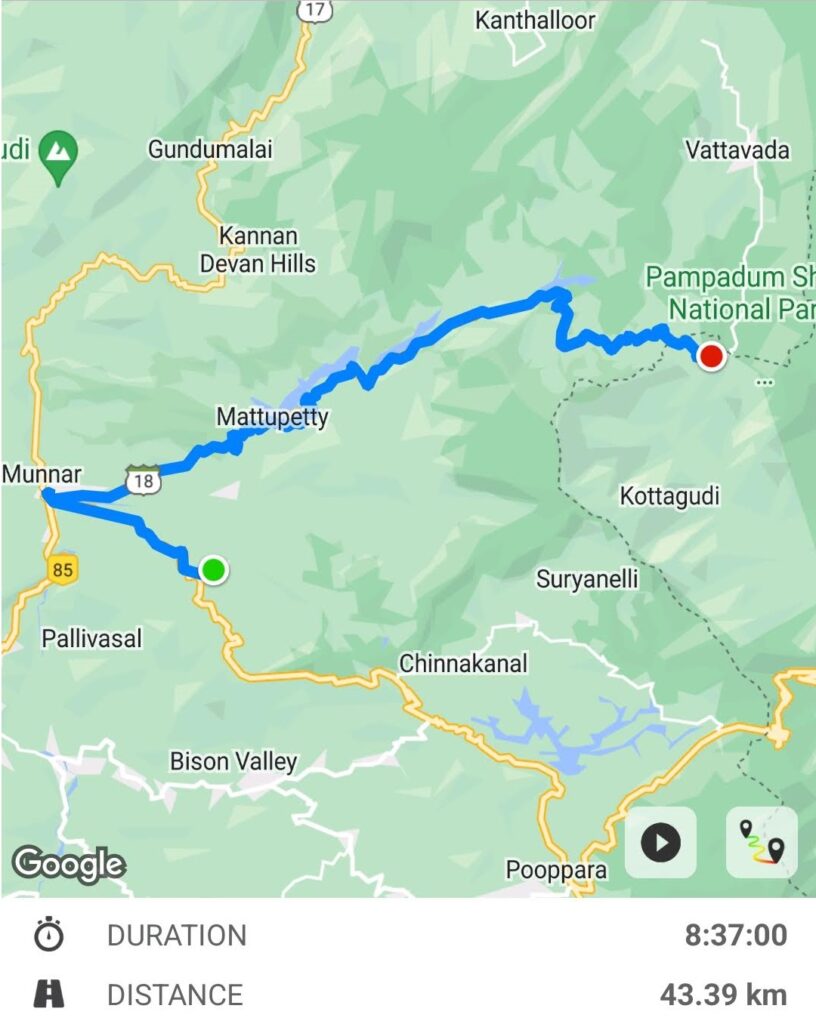
Cycling in Munnar - Map route from Devikulam to Top Station

In Munnar, cycling begins at the Devikulam Adventure Club. I rode the Firefox mountain bike as part of our Winter Cycling adventure program. This day, we rode through Munnar, covering the whole Mattupatty Reservoir bank before reaching the Top Station.
We received an introduction and information on the route we would travel the day before. We examined our mountain bikes and test-rode them on the road next to our campground. The hostel accommodations at this adventure camp were relatively modest; there were no tents. The price included the mountain bike rental, lodging, meals, and insurance.

Munnar Mountain biking

We cycled in between the tea gardens after having our breakfast and being waved off by YHAI officials; there was a climb followed by a gradual descent. Drone photography is perfect for the area. The roads are in good condition. To enter Munnar town, turn right at the end of the road. The area is congested, therefore follow the road that leads to Mattupatty Dam as indicated on the map above. When you cross the dam, you will arrive at the well-known tourist spot. There are too many shops and crowds are common throughout the winter. You may go boating, use speed boats, and participate in adventure programs.

Tea gardens in Munnar

We rode our bikes through other villages as we carried on, passing lovely tea gardens. On this particular day, we cycled around 43 kilometers on a gradually ascending path. There are multiple shops along the route, so finding food and cool drinks is never a problem. Carry a raincoat and attempt to complete the journey early in the day in case it starts to rain later. Up until we arrived at the Top Station, another well-known tourist destination, the final few kilometers were all downhill.

Cycling in Munnar on a foggy day

We slept at an accommodation close by. The next day, we tried to get to the Top Station viewpoint, a short walk away that required a ₹20 admission ticket from the forest department. However, due to the fog and low visibility, we only stayed nearby while enjoying our early-morning tea.

Meanwhile, you may want to check the YHAI - Leh - Lamayuru Cycling Expedition

Day 2 - Cycling in Munnar from Top Station to Kundali Tea Estate

Cycling in Munnar from Top Station to Kundala dam

Similar to the previous day, the first few kilometers of our ride were uphill, followed by a few kilometers downhill. The visibility was terrible and everything was hazy. We deviated from the main road and entered the exclusive tea gardens, which are only accessible to residents. We arrived at this location after passing through a few villages, and we finally came to a stop at the gated tea packing facility. Getting the go-ahead and clearance to continue required some time and a few phone calls. We kept on and passed through a few more villages before arriving at the Kundalu Golf Course.

Kundalu Golf Course
Kundalu Golf Course

Because of how beautiful the area was and how well-kept the green meadows were, we took some time to stop and take pictures. When we reached a road going to the reservoir, we turned around and proceeded on. We stopped in a quiet area to observe the Kundala Dam reservoir while enjoying our packed lunch. After lunch, because the golf course was a private place we continued cycling uphill for the next few kilometers before going downhill till we reached another tea packaging facility. There were no shops nearby, the road was in poor shape, and the region seemed to be a forest. Elephant dung and electric fencing were everywhere.

Kundala dam and reservior near Kundalu Golf Course

From here, it is a moderate ascent uphill with views of Kundala Lake along the way. We spent the night at the Kundali tea estate, which is located further down in the center of the tea gardens. The location is close to Kundala Dam, another well-known tourist destination. We had chosen the off-road path, and it had been a great decision. Keep an eye out because there are wild elephants in this area. Once you have arrived at the campsite, take a hike up the surrounding hill through the tea gardens to enjoy the sunset, lake, cloud-covered mountains, and of course the lovely tea gardens.

Day 3 - Cycling in Munnar from Kundali Tea Estate to Devikulam

Cycling in Munnar from Kundala tea estate to Devikulam

On this day, we continued our detour through a tea estate and a few villages until arriving at the main road. There will be traffic here. So, after crossing the Mattupatty Dam, we diverted from our original course and followed a different one. The trail is surrounded by tea estates but lacks any shops or villages. The highway is parallel to this path. We continued on this track, asking the locals for assistance in determining the precise path. Eventually arrived in Munnar town, then climbed steeply to the Devikulam camp.

Other places that you can visit cycling in Munnar

In addition to the three days mentioned above, you could spend some time cycling to Suryanelli while in Munnar. Suryanelli is a vacation destination in Kerala, India's Idukki district, in the Chinnakanal hamlet. It is around 50 kilometers from Munnar. It offers breathtaking views of mountains, waterfalls, and sunrises in addition to being noted for its tea and cardamom plantations. Numerous species of rare birds and other endangered creatures can be found in the forest in Suryanelli. The town is also surrounded by numerous resorts and tea plantations, making it a well-liked tourist destination.

Additionally, the prominent hospitality residential college Munnar Catering College is located in Suryanelli. Additionally, Suryanelli is not far from Tea Town Munnar, which is situated in the Upper Surianalle Estate, Devikulam, and spans 638 hectares of tea plantation. The proximity to Annaimudi, the highest peak in South India, and the Eravikulam National Park, famous for the Nilgiri Thar, adds to the pure aspect of these hills. It is the highest tea-growing region in the world. The other place to cycle and enjoy the landscape would be Pumbarai.

Where to stay in Munnar?

There are several options for accommodation in Munnar ranging from budget-friendly hotels to luxurious resorts. They will take care of your stay if you chose to go cycling in Munnar with YHAI, but keep in mind that their accommodations are modest. You can choose from hostels in the heart of a tea estate to luxury resorts in remote locations. I advise staying at a hostel if you are traveling alone, whereas resorts are an option for individuals who do not like adventure or are traveling with families.

How to take part in Winter Cycling in Munnar adventure program

The Munnar Winter Cycling adventure lasts for five days. Since this is a youth hostel program, do not expect luxury. Keep in mind that to participate in YAHI activities, you must be a member of YHAI and be an Indian citizen. The cycling event will cost about ₹9,000 as usual, which includes everything. The facilities could have been better. The mountain bike rental fees are covered. On the day of reporting, you must also turn in your medical certificate and admit card. With the membership card, you can take part in events like - 10-day YHAI Goa Trekking – An Extraordinary inspiring hike to the unknown.

How to reach Munnar

By air: Cochin International Airport, located around 110 kilometers from Munnar, is the closest airport. An additional choice is 140 km away from Madurai International Airport. You may easily take a taxi or cab from either airport to travel to Munnar.

By train: Aluva, which is situated about 110 kilometers from Munnar, is the closest railway station. From large cities like Mumbai and Bangalore, you can take a train to Aluva and then take a cab, a public bus, or a state-run vehicle to get to Munnar.

Driving in Munnar

By road: State government public transportation buses connect Munnar to other cities in Kerala and Tamil Nadu. Numerous tour operators also plan pre-packaged bus excursions from Cochin to Munnar. To go to Munnar, you can also take a bus from cities like Kochi, Thrissur, Madurai, and Thiruvananthapuram. There are also plenty of private taxis and cabs available. Also, self-drive cars are available in cities like Bangalore or you can get your own vehicle, which is exactly what I did and went around. You may even mount your cycles on top or back if you are interested in cycling in Munnar.

Before you go on a hike or cycling make sure to check this out – some of the Absolutely mandatory Hiking Accessories to carry. So, that was my experience of cycling to this place. Hope you enjoyed reading this blog post. Buy me a coffee to support my work or you can go to my store to buy some of my images. Also, do not forget to join my FriendZone by signing up for my newsletter. Consider subscribing to my YouTube channel.

Biennale Art Festival 2022-23 - An Astonishing artwork in display

The Kochi-Muziris Biennale is a contemporary art festival that takes place every two years in the city of Kochi, located in the southern Indian state of Kerala. The festival was first held in 2012, and since then, it has established itself as one of India's most important contemporary art events.

Where is the event?

The Kochi-Muziris Biennale is unique in that it is the first biennale of its kind in India and is held in a non-metropolitan city, making it accessible to a wider audience. The festival takes place in various venues across the city, including heritage buildings, warehouses, and public spaces.

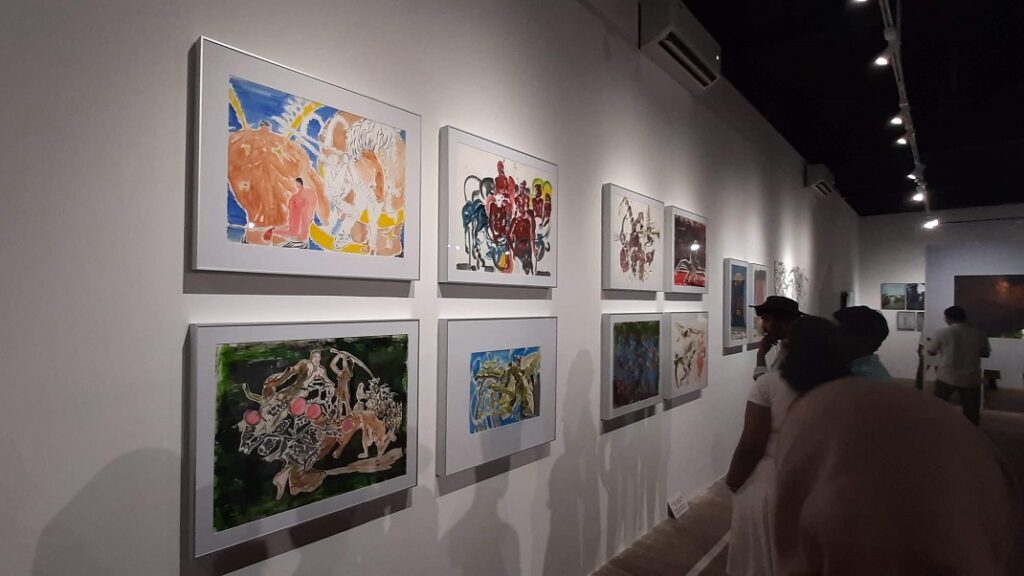
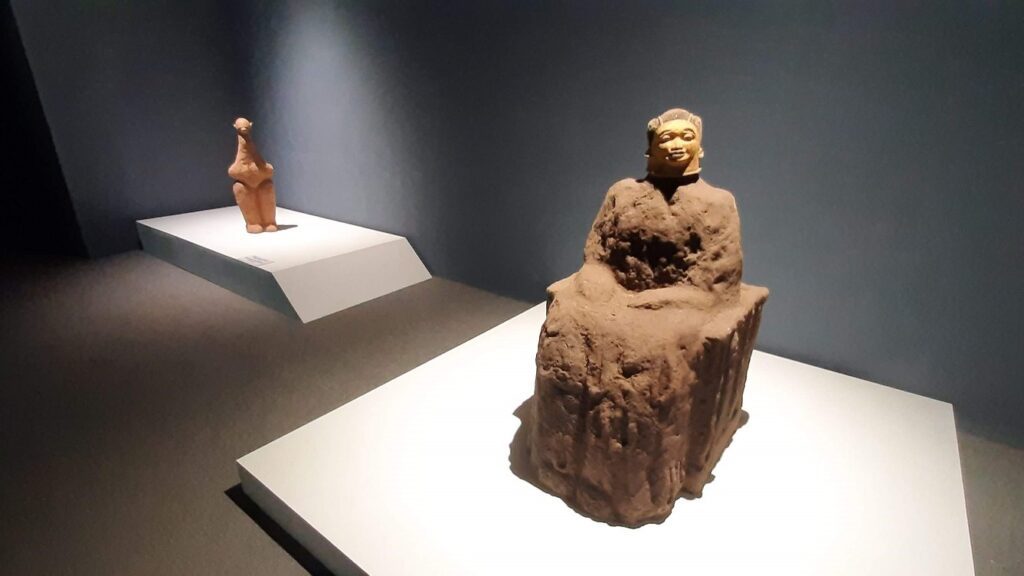
Biennale Art Festival

The theme of the Biennale changes every edition, the latest edition (2022) theme is "Whorled Explorations". Each edition of the Biennale is curated by a different team of curators, who select participating artists from around the world.

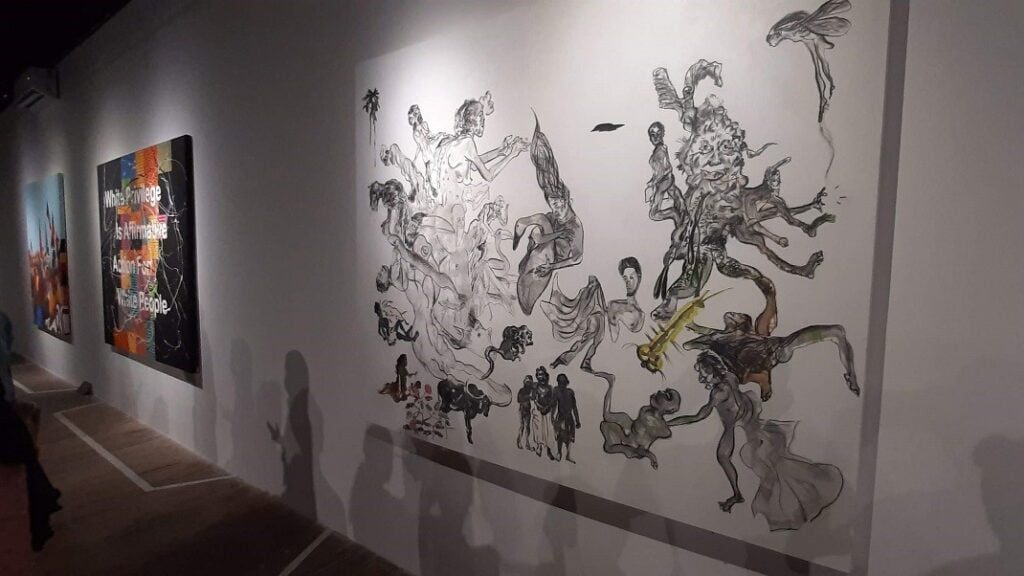
The Kochi-Muziris Biennale features a diverse range of contemporary art, including painting, sculpture, installation, performance, and video art. The festival also includes a variety of programs such as artist talks, film screenings, and workshops.

The Biennale is not only an important event for the art world but also for the city of Kochi. It brings an influx of visitors to the town, providing an economic boost and promoting cultural tourism. It also serves as a platform for local artists to showcase their work and engage with the international art community.

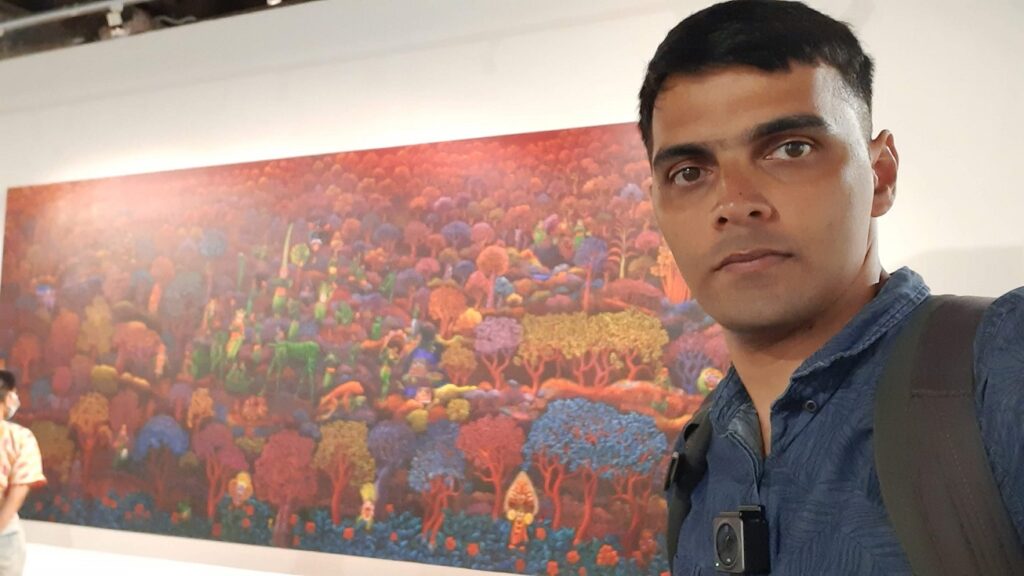
Biennale Art Festival - Ravindra Joisa

What's special in the recent edition?

The most recent edition of the Kochi-Muziris Biennale, which was held in 2022, had the theme of "Whorled Explorations." This theme was curated by the Indian artist Sudarshan Shetty, and it was inspired by the idea of a "whorled universe" - a concept that refers to the interconnectedness of all things in the universe.

One of the special things about this edition of the Kochi-Muziris Biennale was its focus on the concept of a "whorled universe" through the works of the artists. The works on display were a reflection of how the world is interconnected and how our actions have a ripple effect on the world around us.

Another special aspect of this edition was the use of various venues across the city of Kochi, which included heritage buildings, warehouses, and public spaces. This provided visitors with a unique and immersive experience, allowing them to explore the city and its history in addition to experiencing the art.

Additionally, this edition of the Biennale featured a diverse range of contemporary art, including painting, sculpture, installation, performance, and video art. The festival also included a variety of programs such as artist talks, film screenings, and workshops, which provided visitors with an opportunity to engage with the artists and learn more about their works.

Biennale Art Festival

Entry ticket at Biennale Art Festiaval

Note that the entry ticket for an adult per day is ₹150 and ₹50 for kids. The show will go on for a few months. You even get a weekly pass and a monthly pass. Also, the same ticket can be used to enter any of the venues. Most of the events in 2022-23 have taken place within Fort Kochi. You may check their website for more - link.

Famous artists who have participated

The Kochi-Muziris Biennale features a diverse range of contemporary artists from around the world. Some of the famous artists that have participated in the festival include:

  • Anish Kapoor is an Indian-born British sculptor known for his large-scale installations and use of reflective surfaces.
  • Jitish Kallat is an Indian contemporary artist known for his paintings, sculptures, and installations exploring history, culture, and identity themes.
  • Shilpa Gupta is an Indian contemporary artist known for her interactive installations that address surveillance, censorship, and borders.
  • N.S Harsha is an Indian painter and sculptor who combines traditional Indian motifs with contemporary art practices.
  • Dayanita Singh is an Indian photographer known for her conceptual approach to photography and her exploration of the relationship between the photograph and the object.
  • Cai Guo-Qiang is a Chinese artist known for his large-scale installations and use of gunpowder.
  • Subodh Gupta is an Indian artist known for his sculptures and installations that explore the relationship between urbanization and traditional Indian culture.
  • Sudarshan Shetty, an Indian sculptor, and installation artist, often uses everyday objects in his works.
Biennale Art Festival

These are some of the famous artists who have participated in the Kochi-Muziris Biennale, but the festival features many more artists from all over the world. Each edition of the Biennale is curated by a different team of curators, who select participating artists based on the theme of the edition.

Other places in and around Fort Kochi

Also, if you are in Fort Kochi, then there are other places that you might want to visit. For example, the new year Carnival, Chinese Fishing net, Portuguese museums, and Jews Town - are at walkable distances. If you have a little over a day to spare then you might want to visit Athirapally Falls, Thrissur temple, Guruvayur Temple, and lot many historic temples around.

In summary, the 2022-23 edition of the Kochi-Muziris Biennale, with the theme of "Whorled Explorations" was unique in its emphasis on the interconnectedness of all things in the universe and its use of various venues across the city of Kochi, which provided visitors with a unique and immersive experience. The Kochi-Muziris Biennale is a vital event in the Indian contemporary art scene, it offers a unique and inclusive platform for artists to showcase their work and engage with the public. It brings together the local and global art communities and encourages the exploration of new ideas and perspectives in contemporary art.