Memorial Chorten is one of Thimphu's most recognizable landmarks and is located in the city's center. Throughout the day, visitors will see old Bhutanese folks circumambulating the Chorten. Chorten literally means "Seat of Faith," and Buddhists typically refer to such structures as the "Mind of Buddha." With its beautiful murals and detailed sculptures, the Chorten is an outstanding example of Buddhist architecture and artwork.
National Memorial Chorten entrance
Who built Thimphu chorten?
The chorten's construction has been created to show it as "one of Thimphu's most conspicuous religious buildings." The Memorial Chorten, located in the center of the city, is a Tibetan-style chorten, also known as the Jangchup Chorten, modeled like a classical stupa, with a pyramidal pillar capped by a crescent moon and sun. It was erected in 1974 in memory of Jigme Dorji Wangchuck, 3rd Druk Gyalpo.
The distinctive characteristic here is the outward flaring of the rounded section to provide the appearance of a vase (a pyramidal shape), as opposed to a dome shape. The chorten portrays a great number of larger-than-life representations of wrathful deities with their feminine consorts.
Memorial Chorten Architecture
The chorten is a big white tower crowned by a golden spire and a smaller golden spire over the front porch. It is accessed by a tiny garden and a gate with three slate carvings. The three guardian bodhisattvas – Avalokitesvara (the symbol of compassion), Majur (the symbol of wisdom), and Vajrapi (the sign of strength – are depicted on the gate's exterior. Slates depicting images of Ngawang Namgyal, Gautama Buddha, and Padmasambhava are carved on the inside.
To the left are large prayer wheels. On a daily basis, many elderly Bhutanese visit the chorten to circumambulate it, whirl the big red prayer wheels, and pray before the shrine. It has four gates, but only one is available to devotees who wish to visit the shrine. To the left are large prayer wheels. On a daily basis, many elderly Bhutanese visit the chorten to circumambulate it, whirl the big red prayer wheels, and pray before the shrine. It has four gates, but only one is available to devotees who wish to visit the shrine.
The Chorten is circumambulated solely in a clockwise orientation (reciting prayers and whirling the enormous red prayer wheels), as is the case with other religious sites in Bhutan. The Monlam Prayer Festival is celebrated here, and the Je Khenpo (Bhutan's religious leader) addresses and blesses all who gather for the event.
Where is the National Memorial Chorten?
The National Memorial Chorten is located at the Thimphu City Centre in Bhutan. You can drive all the way to this place. Other tourists attraction in Thimphu include the Dzong, the World’s largest mountaintop statue of Buddha Dordenma, Thangka painting gallery. In addition, there are other tourist attractions like the historic house full of artifacts, monasteries, traditional paper mill, etc. Also, read Top 10 Spectacular places to visit in Bhutan and if you are interested in knowing even more in detail then the best guide would be Lonely Planet Bhutan.
Here in this place, you will find a lot of elderly people near the gain prayer wheels. If you are into Portrait photography then these people can be an ideal subject. Just make sure to request them if it is ok to capture their photos.
Bhutan is a culturally and ecologically distinct country. It is the planet's last remaining Buddhist kingdom, perched high in the Himalayas. It has established the Gross National Happiness ideology, in which development is assessed using a comprehensive approach to well-being rather than merely GDP. Tourism, hydroelectric power, and agriculture are the kingdom's main sources of revenue. Well, there are many places to visit in Bhutan, but if you are on a budget trip and have just a few days to spare then here are the top 10 places to visit in Bhutan.
To start your journey, you may directly fly to Paro which might be expensive, or fly to Bagdogra in India and drive to Bhutan. The drive here is scenic as you cross the tea gardens and mountains all around. In the north of West Bengal, there is a diversion to the right which will take you to Bhutan where you need to cross the Teesta river.
The other route will take you to Gangtok, Sikkim which is another beautiful place. Stay overnight once you cross the border at Phuentsholing. On the next day get a visa on arrival and pay the fees to proceed further. You may find the latest updated details here.
By the way, you might want to check the best camera travel gear that I use to travel light and be safe. Also, you might want to get this complete guide with in-depth details on everything you need to know and cover all the places when you plan to travel to Bhutan.
Here goes the list of top 10 places to visit in Bhutan
Phuentsholing
? Phuentsholing, the doorway to the country of thunder dragons, is frequently referred to be the Himalayan Kingdom's residence of kings and queens. Moreover, time flows slowly here, and the residents' simplicity fits the natural tranquility. In addition, at barely 300 meters above sea level, this Bhutanese commercial hub is located next to the Indian town of Jaigaon in the foothills of the Himalayas. In Phuentsholing, there are several sites to visit where you can see the richness of Bhutanese, Nepalese, and Indian cultures. After that, the next stop from Phuentsholing is Paro.
https://youtu.be/kL_wbvBNj_M
Tiger's Nest
?The Paro Taktsang Monastery (Tiger’s Nest Monastery), nestled high in the Himalaya Mountains, is one of Bhutan's most prominent cultural and religious landmarks. This video provides a summary of the hiking trail, what to expect, as well as architectural details of the monastery. It is a 2 to 3 hours of a hike uphill with some beautiful views. This hike is ideal for those who don't want to go for a week-long hike but interested in a short day hike. If you are considering any hike then this is one of the best places to visit in Bhutan, to start with.
https://youtu.be/EvVTGjyqVr0
National Memorial Chorten
☮️ This huge chorten is one of Thimphu's most obvious monuments, and it is the center of daily devotion for many Bhutanese. The whitewashed chorten, with its sun-catching golden finial, has complex mandalas, sculptures, and a shrine dedicated to the popular king, as well as elaborately painted annexes facing the cardinal directions.
Places to visit in Bhutan should include the National Memorial Chorten as the approach to this is in the middle of Thimphu town. The action lasts from early morning until late at night, although visitors are forbidden from attending at night to give devotees a break. Keep an eye on the devoted group of elderly timers who are churning away at room-size enormous prayer wheels beside the main entrance.
Thangka Painting and Art Gallery
?The traditional art of painting the life of Buddha on fabric or silk appliqué is known as Thangka. The origins of the Thangka painting may be traced back to Tibetan Buddhist art. These works were created in Bhutan, Nepal, Tibet, and India. The 'mandala' is seen in Thangka paintings composed of cotton, silk, and human skin (Mandala in Sanskrit means is a spiritual and ritual symbol representing the universe). The life of Buddha is commonly depicted in Thangka paintings. This gallery is not just one of the places to visit in Bhutan but an ideal place to purchase authentic artwork.
A person must train for years to become a thangka artist, and the paintings are extremely uncommon and costly, with prices reaching into the thousands of dollars - sample painting and my complete collection mainly used for home decor. These thangkas are composed of natural color stone crushed plant leaves and roots, as well as 24k gold dust. Your places to visit in Bhutan bucket list must include a visit to this art gallery which is located in Thimphu.
https://youtu.be/wicAdpMcENw
Buddha Dordenma
? World’s largest mountaintop statue of Buddha Dordenma is located in the western parts of Bhutan, Thimphu. A must-visit place if you are in Thimphu. The huge structure of Buddha (Shakyamuni) is made of bronze and is gilded in gold. The view from here is breathtaking as it overlooks the southern entrance to Thimphu valley. This huge structure of Buddha is a new addition to this historical place and is now one of the top places to visit in Bhutan.
? The National Memorial, Dochu La, or Dochu Pass, is at the pass's center peak with 108 stupas or Chortens. It's midway between Thimphu and Punakha, Bhutan, and offers breathtaking views of the Himalayan mountain range. Dochula Pass is around 3100 meters high, and the area is still hazy. The weather at Dochula Pass is beautiful and clear around December, allowing you to see the Himalayan mountain range.
https://youtu.be/5_l3ecLzsII
Chimi Lhakhang - Fertility Temple
⛩️ There is one less known and unique monastery by the name Chimi Lhakhang, with a lot of 'penises' around. Yeah, you heard that right. Chimi Lhakhang, located in the Punakha requires district-level permission. In addition, Chimi Lhakhang is on the way to Punakha Dzong. It is just over 100 kilometers from Paro and 65 kilometers from Thimphu. Meanwhile, reaching the Chimi Lhakhang monastery from the highway is an approx one-kilometer hike. Above all, the hike is scenic, crossing the paddy fields, via the Yowakha village full of handicraft stores, paintings, and prayer flags. Also, the hike can be even more picturesque if you take the back entrance, next to the Puna Tsang Chu river.
https://youtu.be/upoqSUIXGyo
Punakha Dzong
? Punakha Dzong – meaning ‘great pleasure’ or ‘joy castle’, is the administrative headquarters of Punakha. Also, it is the second oldest and second-largest dzong in Bhutan, and one of its most beautiful buildings. Moreover, Punakha Dzong served as the administrative headquarters until 1955. Above all, the Punakha valley, the location of Dzong is in between the Pho Chhu (male) and Mo Chhu (female) rivers. Punakha is Bhutan’s winter capital. Punakha Dzong tops the places to visit in Bhutan.
https://youtu.be/uhqiYPu6Q2M
In addition to Punakha Dzong, there are many Dzongs at different places to visit in Bhutan. The one in Thimphu is spectacular, especially late in the evening when all the lamps are illuminated one by one. Most of the Dzongs are lit up and look amazing and a perfect place for nighttime architecture photography.
Punakha Suspension Bridge
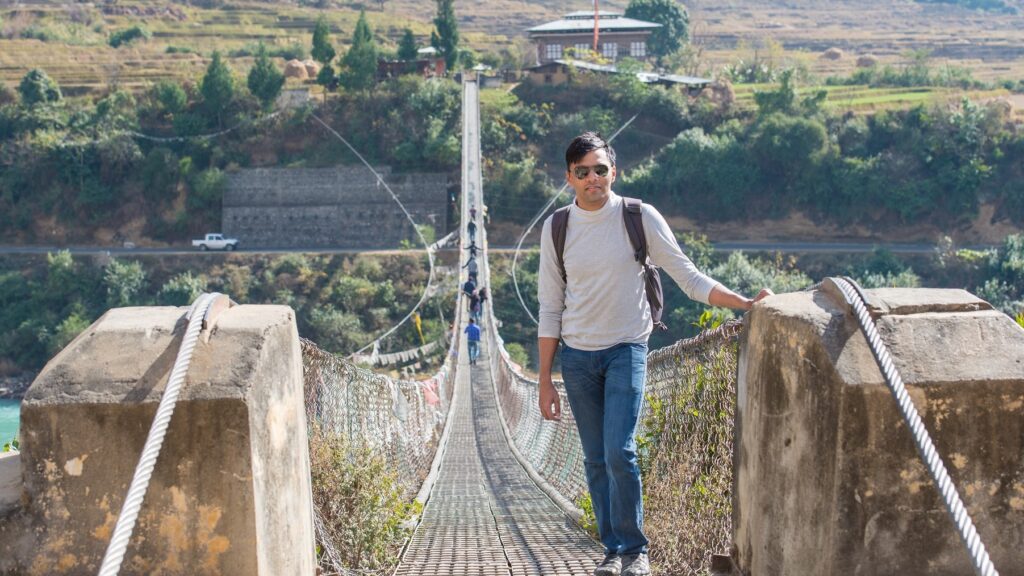
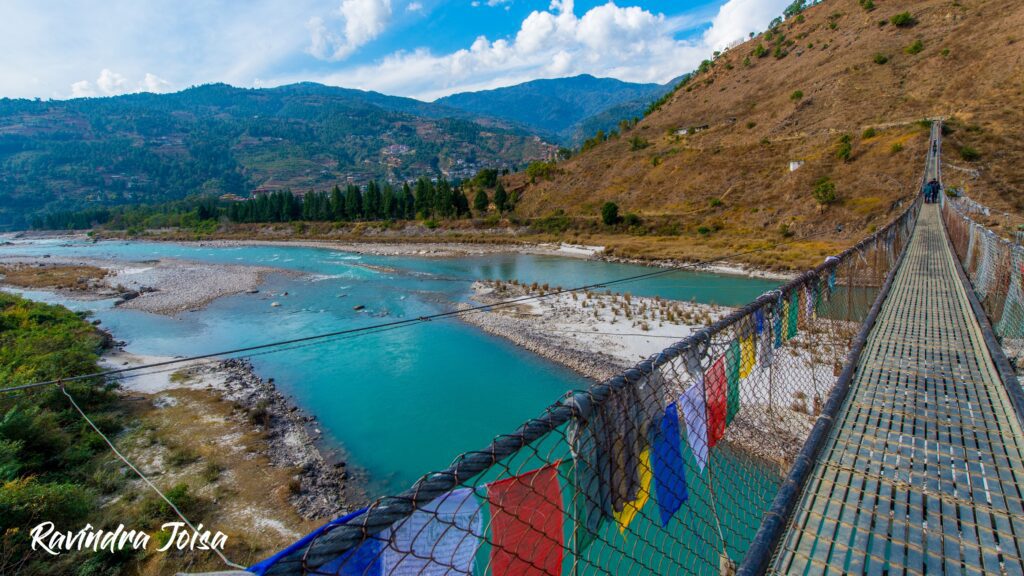
? Suspension bridges are ideal for Bhutan’s high mountains and deep valleys. Punakha Suspension Bridge is a wonderful illustration of this, for the decoration of colorful prayer flags. This is one of Bhutan’s longest suspension bridges. In addition, it connects Punakha Dzong to Shengana, Samdingkha, and Wangkha villages across the Po Chu river, which is usually not listed in the places to visit in Bhutan. It is, nevertheless, astonishingly stable for a 520-foot-long suspension bridge. Moreover, the east side of the river is an excellent starting place for multi-day hikes in the surrounding mountains. Also, the bridge provides a beautiful view of the river and valley.
https://youtu.be/Fc0by-do5Dg
Punakha Campsite
⛺ Camping in Punakha along the banks of the Mo Chu River is a dream come true. Firstly, the golden dunes and flowing water create such a stunning scene that will make you speechless. Secondly, around the river are tiny establishments where you may spend time with the locals. You may also witness the perfect Bhutanese architecture at Punakha Dzong in the twilight. The campsite at Punakha is one of the top places to visit in Bhutan known for its beautiful misty mornings that appears truly magical, next to the river.
https://youtu.be/m-R1E_-EBZ4
Places other than these top 10 places to visit in Bhutan
So, these are the top 10 places to visit in Bhutan. Other places include the Ha valley that stretches along the Haachu river in west Bhutan. In addition, you may want to cover the Dzong present in Paro and Thimphu, and do not forget to see the lighting late in the evening. Also, visit the old traditional paper mill which is right next to Thangka Painting and Art Gallery.
When visiting some of the locations, please be considerate. Unbeknownst to them, outsiders may pay a visit. For example, the clothing code for entering the monastery, the use of a camera. It is important to consult while visiting places in Bhutan with your local guide.
In conclusion, for those who want to experience the true Buddhist culture and heritage then this is the place to visit. For more info and places to visit in Bhutan, you may want to buy this book by Lonely Planet Bhutan where you will find the details on the local festivals, hotels, restaurants, and many more. Also, it has more details on For those who have time these if you are on a budget trip and have just a few days to spare then here are the top 10 places to visit in Bhutan is just the tip of the iceberg. And finally, support my work by Subscribing to my YouTube channel and joining my FriendZone for more.
Suspension bridges are ideal for Bhutan's high mountains and deep valleys. Punakha Suspension Bridge is a wonderful illustration of this, for the decoration of colorful prayer flags. This is one of Bhutan's longest suspension bridges. It connects Punakha Dzong to Shengana, Samdingkha, and Wangkha villages across the Po Chu river. It is, nevertheless, astonishingly stable for a 520-foot-long suspension bridge. The east side of the river is an excellent starting place for multi-day hikes in the surrounding mountains. Also, the bridge provides a beautiful view of the river and valley.
Punakha Suspension bridge in Bhutan
Which is the longest bridge in Bhutan?
Punakha Suspension Bridge is one of Bhutan's longest suspension bridges, reaching 160-180m and located high over the fast Po Chhu River. The bridge links Punakha settlement and the Punakha Dzong and is mostly utilized by inhabitants from the opposite side of town as a bypass to the Punakha Dzong.
How to get there?
Punakha Bridge is a short walk from Punakha Dzong, but because it is not on the main highway, people overlook this place. Follow the Puna Tsang Chu River north from the Dzong, through the crematorium, either by country roads on the west bank or the Trashigang-Semtokha Highway. If you are at Punakha campsite which is a mile from Punakha Dzong, cross the bridge.
The Suspension Bridge
The bridge in front of Punakha Dzong is an excellent example of this. The bridge at Punakha, unlike the others, takes the support of cables anchored to enormous concrete slabs on the banks. The bridge's cantilever has some inherent elasticity that causes it to sway in high gusts, although not as much as you might anticipate. This is owing to the bridge's stabilizing cables, which taper out at both ends. The deck is constructed of solid wood planks that are nested within the bridge structure.
PunaTsangChu river
Village on the other side of the bridge
Visit the lovely village on the opposite side of the bridge. The bridge connects Shengana, Samdingkha, and Wangkha villages to the Wangchuk Kings' fortress. Apart from an exciting trek across the bridge, the bridge connects Punakha town to numerous holy and important locations worth visiting.
The best thing to do here is cross the bridge, visit the local shop and have the local tea. You get to hear the prayers, drum beats, etc from upstairs and lots many people chanting mantras. Enjoy the scenic view, have a cup of tea with the chanting mantra as your background music and then go around the prayer wheel. You can continue to explore the village further or go back to cross the bridge and visit the Punakha Dzong.
Punakha enjoys a pleasant climate throughout the year. Visit Punakha in the months of February to April and October to December. It's best to stay away from this valley during the wet seasons, as flash floods are prevalent. Every year, the Tsechu festival takes place in late February or early March, giving it the perfect opportunity to appreciate Bhutan's spring weather and culture. The spring season, with a mean temperature of 18°C, ushers in stunning purple jacaranda blooming sceneries all down the valley.
Pho Chhu Suspension Bridge Suspension Bridge
When was Punakha suspension bridge built?
Punakha Suspension Bridge in Bhutan is one of the world's oldest suspension bridges, said to have been erected by the Buddhist monk Thangtong Gyalpo. It has been refurbished several times over the years, but it was originally one of the eight bridges that served as the prototype for many of our current suspension bridges. The bridge's age is still a mystery.
To conclude, the place is unique with the walk along the longest bridge in Bhutan. The view of mountains in front and the traditional tea on the other side of the bridge makes this place interesting. Also, check the other spectacular and top 10 places to visit in Bhutan. In addition to these photos, watch the video below for more photos and to get a feel of the place in and around Punakha Suspension Bridge. Also, consider SUBSCRIBING to my YouTube channel.
Punakha Dzong - meaning 'great pleasure' or 'joy castle', is the administrative headquarters of Punakha. It is the second oldest and second largest dzong in Bhutan, and one of its most beautiful buildings. Moreover, Punakha Dzong served as the administrative headquarters until 1955.
Importance of Punakha Dzong
Punakha Dzong, located in western Bhutan, is often regarded as the country's most beautiful Dzong. In Bhutanese history, it is also the most important Dzong. The Dzong houses most of Bhutan's national treasures, and it was here that Bhutan's King, His Majesty King Jigme Khesar Namgyel Wangchuck, and his lovely bride, Bhutan's Queen Jetsun Pema, married in October 2011. The Punakha Dzong is by far Bhutan's most iconic landmark, rivaling The Tiger's Nest in Paro, so it's easy to see why it's one of the country's top three attractions, along with the Tiger Nest Monastery and Dochula Pass.
Punakha surrounded by Po Chu Mo Chu rivers
Location of Punakha Dzong
In the Punakha valley, the location of Dzong is in between the Pho Chhu (male) and Mo Chhu (female) rivers. Punakha is Bhutan's winter capital. Because Punakha Dzong is just 1,200 meters above sea level, you will not experience oxygen difficulties as you would at higher elevations such as Paro Taktsang (Tiger's Nest), making it an excellent spot to commence for beginning hikers who may experience altitude sickness in the first few days.
The significance of Punakha Dzong is that the dzong was one of the 16 dzongs erected by the Zhabdrung during his reign from 1594 to 1651 as an "embodiment of Buddhist principles." There are three docheys in the dzong (courtyards). A steep wooden draw stairway and a heavy wooden door that is locked at night are among the defensive fortifications installed in the dzong to protect it from enemy attacks. A big prayer hall was later erected after the dzong was damaged by a fire.
Punakha Dzong Architecture
Ngawang Namgyal is the mastermind behind Punakha Dzong and is Bhutan's second oldest and most magnificent Dzong. Also, It is a six-story building with a central tower situated at an average elevation of 1,200 meters against a picturesque mountainous backdrop. In addition, compacted soil, stones, and timber for doors and windows constitute the construction of the Dzong.
Six-story building with a central tower
Firstly, the Dzong was damaged by several fires and was extensively damaged as a result of the 1897 earthquake. A high wooden draw staircase and a massive wooden door are among the defensive measures that remain tall in the dzong to safeguard it from enemy attacks.
The Courtyards
Whitewashed Stupa in the first courtyard
The first courtyard houses the dzong's administrative buildings, a huge white-washed stupa, and a bodhi tree. The monks' living quarters are in the second courtyard. In this courtyard, there are two ancient halls. Also, the burials of Pema Lingpa and Ngawang Namgyal are in the third courtyard. It is located at the dzong's southern extremity.
Bodhi Tree in the first courtyard of Punakha Dzong
In the Mo Chu and Pho Chu rivers, flash floods generated by glacial lake outburst flooding in the upper parts of the valley are regular and have caused flooding and damage to the dzong in the past. Restoration is now complete with the Government of India sponsorship. The Dzong is now as magnificent as its historic times.
Inner Courtyard of Punakha Dzong
Festivals at Punakha Dzong
Domche is a yearly celebration held at the Dzong that attracts people from all around the region, including villages and outlying areas. There are some pretty magnificent performances during this five-day celebration, also known as the Punakha festival, which takes place in February/March. A re-enactment of the Tibetan invasion of Bhutan in 1639, in which the Tibetans were defeated, is a significant exhibit. Another annual rite at this dzong is the Lhenkey Dungchhur, which is a remembrance of departed spirits.
To conclude, the place has some amazing artwork, well-documented history and attracts a lot of visitors. In addition to these photos, watch the video below for more photos and to get a feel of the place in and around Punakha Dzong. Also, consider SUBSCRIBING to my YouTube channel.
The National Memorial, Dochu La, or Dochu Pass with 108 stupas or Dochula Chortens is erected in the pass's central hilltop. It's located halfway between Thimphu and Punakha in Bhutan and provides amazing panoramic views of the Himalayan mountain range.
How high is Dochula pass? - Dochula Pass' height is about 3100 meters and the place remains foggy. Around December, the weather in Dochula Pass is perfect and clear, allowing you to observe the Himalayan mountain range. You may expect snowfall early in the year.
Why was the Dochula Pass built?
Dochula Pass history - It was constructed in memory of King Jigme Singye Wangchuck, the fourth 'Druk Gyalpo' (head of state). It was created to accompany the chortens, with a view of the snow forest and the Himalayas. This is a significant center of devotion for the villagers, who visit the monastery practically every day to pray.
Check the World’s largest mountaintop statue of Buddha Dordenma, which is located in Thimphu. Thimphu to Dochula pass distance - Firstly, the 108 chortens on Dochula Pass, is around 23 kilometers from Thimphu, take 40 minutes to reach. Secondly, to reach Dochula Pass hire a taxi from Thimpu or go for a solo bike ride. With its hairpin twists, dense jungle, up and down mountain passes, the route is reminiscent of traveling through the Western Ghats in southwest India. On reaching Dochula Pass, park your vehicle near the cafe.
The cafe might be overcrowded with a lot of tourists. You may want to quickly grab a cup of hot coffee and explore the place under cold weather. Moreover, the place is unique and an amazing place to capture photos. You can have the Himalayan mountain range in the background and stupas in the foreground. However, do not make an attempt to climb up the stupas. It is strictly not allowed and is a punishable offense. Basically, in simple words just explore the place and be respectful to Bhutanese culture and tradition.
To the opposite of the 108 chortens is the Druk Wangyel monastery. Firstly, this monastery has a huge statue of Buddha and other deities inside. Secondly, it has paintings depicting the life of Buddha and other stories. The view from the outside is breathtaking. Also, you get to see the 108 chortens from a different angle.
From here Punakha is another 3 hours drive. By the way, do not forget to visit the mad man's Fertility Temple - Chimi Lhakhang on the way. You'll need to pass the rice fields and view traditional cottages with paintings on the walls. Also, the beautiful view of the Pochu Mochu river. The colorful prayer flags on the way just make the journey even more memorable.
Note: Be respectful when you visit some of the places. Outsiders might visit without knowing. For example - The dress code when you enter the monastery, usage of the camera, the staircase entrance at Punakha Dzong - the middle row is for the king, no entry zones for outsiders at the third courtyard of Punakha Dzong, do not make any attempt to climb up the chortens for a photoshoot. The best is to check with your local guide.
To conclude, Dochula Pass is a renowned tourist destination because it provides a breathtaking 360-degree panoramic view of the Himalayan range. The vista is particularly breathtaking on clear winter days. Snowcapped mountains give a stunning backdrop to the tranquility of the 108 chortens that dot the mountain pass. Watch my YouTube video below and consider subscribing to my YouTube channel.
The Land of Thunder Dragon in the Himalayas, Bhutan is a heavenly place to visit. A country that gives priority to the happiness index. In addition, this country is full of stupas, Buddhist monasteries, and artwork. So, expect all the places to be tranquil and serener. But, there is one less known and unique monastery by the name Chimi Lhakhang, with a lot of penises around. Yeah, you heard that right.
It is well-known across Bhutan as a fertility-inducing location for all guests who come here hoping to have a kid. Several pilgrims, particularly newlywed couples, come here to seek the blessings of the saint who is reputed to possess the Magical Thunderbolt Of Wisdom.
Chimi Lhakhang, located in the Punakha requires district-level permission. However, a tourist guide will help you with the necessary permissions. The fee is per day stay in Bhutan and can be super expensive for outsiders other than a few countries in the Indian subcontinent and a guide is a must.
Where Chimi Lhakhang located?
Chimi Lhakhang is on the way to Punakha Dzong. It is just over 100 kilometers from Paro and 65 kilometers from Thimphu. But it takes 2-3 hours to drive in the mountains. Meanwhile, reaching the Chimi Lhakhang monastery from the highway is an approx one-kilometer hike. The hike is scenic, crossing the paddy fields, via the Yowakha village full of handicraft stores, paintings, and prayer flags. Also, the hike can be even more picturesque if you take the back entrance, next to the Puna Tsang Chu river.
Chimi Lhakhang monastery is no different from other monasteries, it just has a lot more penises. This monastery also known as the Fertility temple was originally built back in 1499 AD on a short hill. This penis-focused monastery is dedicated to Buddhism's "Divine Madman". In addition, he was 'the monk of 5000 women', his unorthodox ways of teaching Buddhism by singing, humor, and outrageous behavior, was shocking and with sexual overtones. Women who come to the temple in the hopes of conceiving are forced to carry a wooden phallus around the temple three times.
Who built the Chimi Lhakhang?
Chimi Lhakhang, also known as the Chimi Monastery or Temple, is a Buddhist monastery in Punakha District, Bhutan, near Lobesa. It was erected by the 14th Drukpa hierarch, Ngawang Choegyel after the land was blessed by the Divine Madman, the maverick saint Drukpa Kunley.
Divine Madman is also the saint who advocated the use of phallus symbols as paintings on walls and as flying carved wooden phalluses on house tops at four corners of the eaves. The monastery is the repository of the original wooden symbol of the phallus. The wooden phallus has a silver handle as decoration. People are blessed with the wooden phallus, who visit the monastery on pilgrimage, particularly women seeking blessings to beget children. More on inside the temple structure and tradition refer to the wiki.
About 15 minutes drive from Chimi Lhakhang is the beautiful Punakha Dzong, where the royal wedding takes place. Therefore, for tourists, this is a must-visit place. After that, a kilometer drive from here is a beautiful campsite where you can stay overnight, right next to the river. Also, on the other side of Punakha Dzong is the Punakha Pho Chhu suspension bridge. However, vehicles are not allowed on top of this bridge. Cross the bridge and have some local tea on the other side of the river in a traditional style.
To conclude, a visit to this place is unique, if you consider all the images that are put up in each and every house. Also, considering the story you get to hear of the divine madman. Above all, as this is a fertility temple, people from all around the world visit this place hoping to get the blessings to beget children. Also, do not forget to visit one of the local handicraft stores on the way to this temple. Even the world-famous Thangka paintings (more details) are available. Check out the YouTube video below and please consider subscribing to my YouTube channel.
Thangka painting has its origins in Tibetian Buddhist paintings. These paintings are made in Bhutan, Nepal, Tibet, and India. Thangka paintings are made on cotton, silk, and human skin depicting the 'mandala' (Mandala in Sanskrit means is a spiritual and ritual symbol representing the universe). Thangka paintings usually represent the life of Buddha.
The painting takes a few months to complete. An artist completing his painting work.
The Thangka Painting Gallery
There are multiple Thangka painting galleries in Bhutan and Nepal. I visited one of these galleries. The place is located next to an ancient paper mill in Thimphu town. The 'Thangkha Painting Gallery' is a school for many who want to learn as well as this place has some of the incredible paintings in the display room.
Visitors are not allowed to record or capture the final paintings. With permission, I managed to get the video and photos of those people who were working at this gallery. Thanks to the friendly staff. The gallery has paintings, craftworks, dragon masks, cloth items. The staff explained to us how it is made, the colors used, when and where it is used, etc.
The Thangka Painting Gallery. We were denied photographing the finished products which are inside the main gallery.
How is Thangka Painting made?
The detailed work, the amount of time and training involved in doing each of these paintings astonished me. It takes more than 6-9 years to master this painting work. Each of these paintings takes almost 1 year of work to complete. No wonder why these paintings are so expensive. The size of each of these paintings varies from A4 size to huge paintings, which are displayed in Monasteries during rituals or ceremonies.
Check out the video below where you can see the Thangka Painting gallery which is in Thimphu and people are busy with their artwork. These Thangka Paintings are super expensive and can easily cost 1000s of American US dollars. I have found a few online which is inexpensive but are equally good, ideal for home decor.
Most of the Thangka paintings are traditionally kept unframed and rolled up when not on display. These paintings are made of natural color and are very delicate, have to be kept away from moisture. These paintings depict the life of Buddha, mantras, various influential lamas, the visual representation of the art of enlightenment, etc.
https://youtu.be/wicAdpMcENw
At this art gallery, you will find professional artists painting with natural colors. Also, there are other handmade crafts, like the mask used in festivals where they perform the mask dance.
Traditional Paper Mill
Also, if you go a little further outside of this gallery, you will find the old traditional way of making paper. These traditional ways of making take time and money and this is the only mill that is present as of today. The papers are mainly used for artwork, paintings, manuscripts. The paintings and manuscripts are kept available for sale at this art gallery. Also, you get notebooks made of these papers which is expensive.
In short, these paintings are beautiful. A close-up view of these paintings will show you the kind of effort that has gone into the making of each of these masterpieces. No wonder the finished product is so expensive considering the training it takes to make this, the natural colors, and most importantly the time it takes to complete just one painting.
If you enjoyed reading this content then you can buy me a coffee to support my work or buy some of my photos from my store. Also, join my friendzone and signup for my newsletter.
The world's largest mountaintop statue of Buddha Dordenma is located in the western parts of Bhutan, Thimphu. A must-visit place if you are in Thimphu. The huge structure of Buddha (Shakyamuni) is made of bronze and is gilded in gold. The view from here is breathtaking as it overlooks the southern entrance to Thimphu valley. Also, this mega-structure of Buddha Dordenma is located atop a hill in Kuenselphodrang Nature Park, Thimphu, the capital of Bhutan.
About the statue of Buddha Dordenma
The statue of Buddha Dordenma is 169 feet (51.5 meters) high. Within this megastructure are 125,000 smaller Buddha statues. Of this, 100,000 are 8 inches tall and 25,000 are inches tall. The statue of Buddha Dordenma is on top of a large meditation hall.
Two prophesies are fulfilled by the monument as well. The first, as predicted by yogi Sonam Sangpo, is the construction of a Buddhist statue in the area to "bestow blessings, peace, and happiness on the whole globe." Furthermore, Guru Padmasambhava, sometimes known as the "second Buddha," is supposed to have described the statue in the seventh century. By fulfilling both prophesies in a gleaming manner, this statue kills two birds with one stone.
Who built Buddha Dordenma in Bhutan?
This is a brand new structure that was built recently. The statue was built at a cost of US$47 million by Aerosun Corporation of Nanjing, China, and was financed by Singaporean billionaire Rinchen Peter Teo. The overall cost of the project exceeds US$100 million. These hundreds of smaller Buddhas, like the giant Buddha, are plated and made of bronze, which is one of the reasons the statue cost about $100 million to create when it was built in 2015 to commemorate the 60th birthday of Jigme Singye Wangchuck, Bhutan's fourth monarch.
Where is the Buddha statue located?
The drive to this location is scenic. To reach this place from Thimphu, you can drive to the backside of the structure or park in front, but there is a staircase all the way up from the main entrance. Once you climb the stairs, the open space is big enough to accommodate a few thousand. The statue of Buddha Dordenma is sited amidst the ruins of Kuensel Phodrang, the palace of Sherab Wangchuck, the 13th Desi Druk. I would recommend going in the evening to enjoy the view from the top.
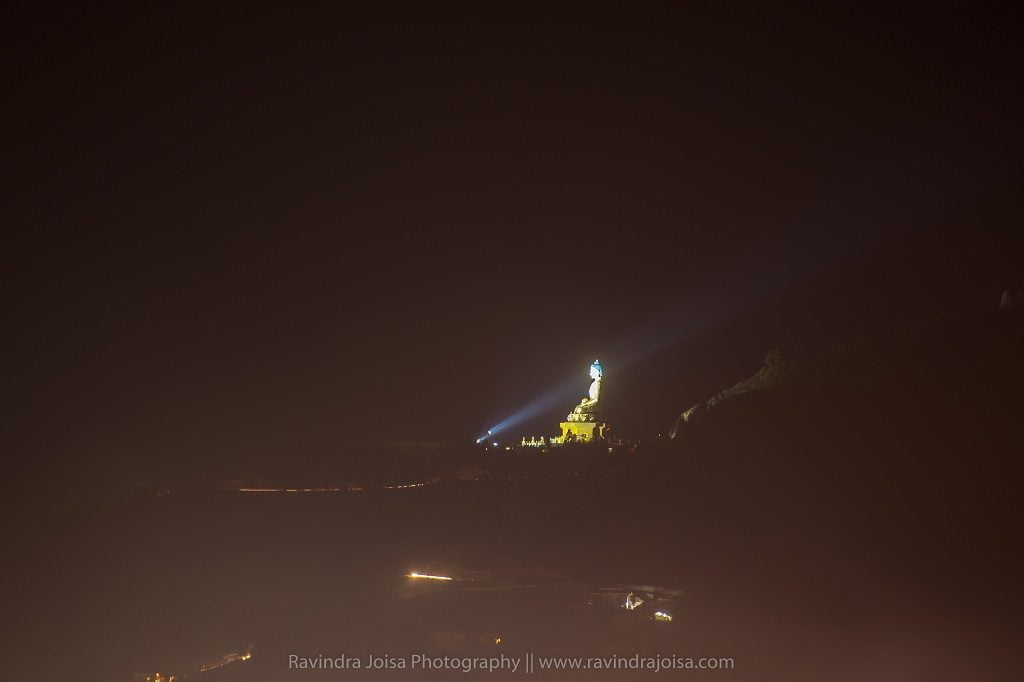
The ideal time to visit would be during summer in Bhutan for those who do not like snowfall. Firstly, this new structure is a must-visit place in Thimphu. Secondly, the lighting at night and the view is from far off, is breathtaking.
Zoomed in view from Thimphu
Other places to visit in Thimphu
When you are in Thimphu consider visiting the beautiful Dzong, Thangka painting and art gallery, and National Memorial Chorten. Also, there is a Scottish cafe with some best snacks. We spent some time here in this cafe on a cold night and was a wonderful experience.
For more information, you may visit the Bhutan Tourism website or buy a copy of the Lonely Planet Bhutan book which has all the required information on hotels to stay, cafes, places to visit in detail. Hope you enjoyed reading this blog post. Buy me a coffee to support my work or you can go to my store to buy some of my images. Also, do not forget to join my FriendZone by signing up for my newsletter.
If you are planning a trip to Bhutan and want to go from Phuentsholing to Paro, you should read this blog post. Phuentsholing, the doorway to the world of thunder dragons, is frequently recognized as the residence of the Himalayan Kingdom's kings and queens. Time flows slowly here, and the simplicity of the people compliments the peacefulness of nature. On the Himalayan foothills, this Bhutanese commercial hub is near the Indian town of Jaigaon. In Phuentsholing, there are a lot of places to visit where you can see the diversity of Bhutanese, Nepalese, and Indian cultures.
How to reach Phuentsholing Bhutan
If you are coming from India, you have two alternatives for traveling to Paro: through Phuentsholing or directly to Paro. It's worth mentioning that, as of this writing, if you're an Indian citizen, you don't require a visa. All you want is proof of Indian citizenship. In addition, if you are not an Indian, you may choose to travel directly to Paro.
For starters, a flight from Mumbai to Paro is more expensive. If you are flying from Bangalore to Bhutan, the best option is to travel directly to Bagdogra, West Bengal. Although daily flights are available, I do not recommend going through Delhi. Second, after arriving in Bagdogra, take a shared cab to Phuentsholing. The travel will take between 4 and 5 hours. The India-Bhutan border crossing is open during the day but closes at 8:30 p.m. One of the hotels in Phuentsholing after crossing the border. Phuentsholing hotels are reasonably priced and plentiful, as this is the commerce center between the two nations.
I raced to the visa office the next morning which is in the town center. Even though Indians do not need a visa to enter Bhutan, we must obtain authorization and show various authentic documents, such as passports. Prepare a few photocopies and xerox copies. It will take a few hours for the approval to reach two locations. While others snacked, we proceeded to "Zangtopelri," which I suppose is a temple. It should be noted that, according to current updates, Indian tourists are paid an admission fee, but it is significantly cheaper than in other nations.
Places To Visit In Phuentsholing
If you have a day or two to spare then consider visiting the following places.
Bhutan Gate
Amo Chhu Crocodile Breeding Centre
Zangto Pelri Lhakhang
Zangto Pelri Park
Karbandi Monastery
Torsa River Side
Phuentsholing Market
Phuentsholing Viewpoint
Phuentsholing Park
Palden Tashi Chholing Shedra
Phuentsholing to Paro
We stashed our luggage and boarded a minibus bound for Paro from Phuentsholing. The entire explanation may be seen in the video below. Our permits were checked at a checkpoint along the highway. In appearance, the trail mimics the western ghats of southwest India. Greenery abounds, and Indian BRO keeps the road nice. The vast majority of them do not exceed 60 kilometers per hour. Furthermore, with a lunch break in between, it took us almost eight hours to arrive at Paro.
If you don't want to waste time driving from Phuentsholing to Paro, which takes two days if you come from Bagdogra, try flying directly to Paro. Paro has an airport, which is regarded as a dangerous site to land since only a few highly qualified and talented pilots are permitted to fly here. These pilots are familiar with the terrain and can land safely by gliding in the valley. You can, however, spare a day to tour Paro and see the Dzong.
Paro town remains quiet after dark, most of the shops are still open and there are a few cozy places where you can hang out with your friends and explore shops where they sell antiques and artwork. On the next day, you might want to start exploring Paro with a hike to Tiger's Nest, an incredible cultural monument. A visit to Tiger's next will take the entire day, so it is better to start early.
https://youtu.be/kL_wbvBNj_M
In short, the day from Phuentsholing to Paro is more of travel. Read more on the top places to visit in Bhutan. Also, you might want to read more to know every hidden place, festival, local cafe, etc here in this book. Support my work by subscribing to my YouTube channel for more travel and photography videos.