Showing posts with label Punakha. Show all posts

Punakha Suspension Bridge - Truly thrilling and massive

Suspension bridges are ideal for Bhutan's high mountains and deep valleys. Punakha Suspension Bridge is a wonderful illustration of this, for the decoration of colorful prayer flags. This is one of Bhutan's longest suspension bridges. It connects Punakha Dzong to Shengana, Samdingkha, and Wangkha villages across the Po Chu river. It is, nevertheless, astonishingly stable for a 520-foot-long suspension bridge. The east side of the river is an excellent starting place for multi-day hikes in the surrounding mountains. Also, the bridge provides a beautiful view of the river and valley.

Punakha Suspension bridge in Bhutan

Which is the longest bridge in Bhutan?

Punakha Suspension Bridge is one of Bhutan's longest suspension bridges, reaching 160-180m and located high over the fast Po Chhu River. The bridge links Punakha settlement and the Punakha Dzong and is mostly utilized by inhabitants from the opposite side of town as a bypass to the Punakha Dzong.

How to get there?

Punakha Bridge is a short walk from Punakha Dzong, but because it is not on the main highway, people overlook this place. Follow the Puna Tsang Chu River north from the Dzong, through the crematorium, either by country roads on the west bank or the Trashigang-Semtokha Highway. If you are at Punakha campsite which is a mile from Punakha Dzong, cross the bridge.
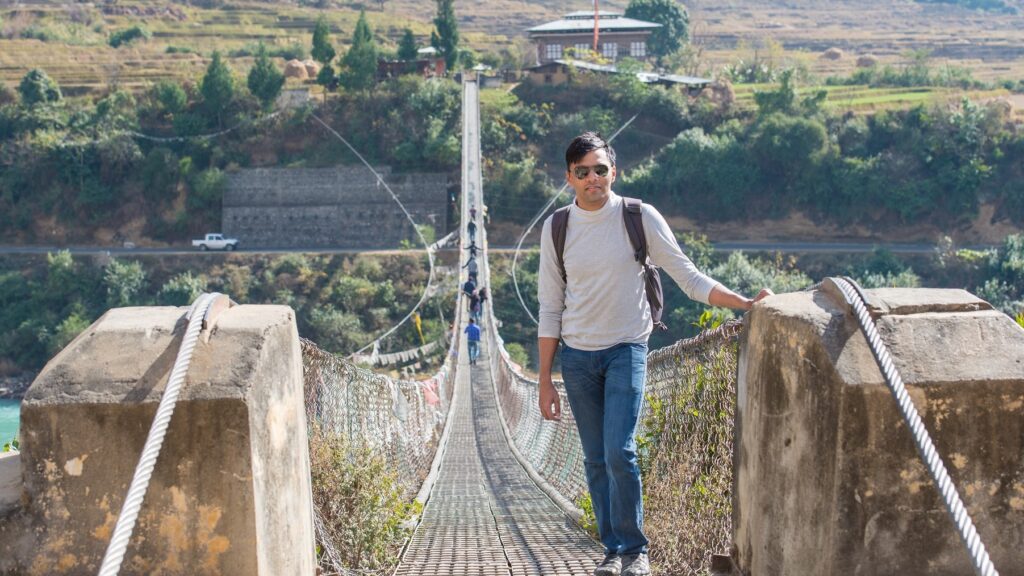
The Suspension Bridge

The bridge in front of Punakha Dzong is an excellent example of this. The bridge at Punakha, unlike the others, takes the support of cables anchored to enormous concrete slabs on the banks. The bridge's cantilever has some inherent elasticity that causes it to sway in high gusts, although not as much as you might anticipate. This is owing to the bridge's stabilizing cables, which taper out at both ends. The deck is constructed of solid wood planks that are nested within the bridge structure.

PunaTsangChu river
PunaTsangChu river

Village on the other side of the bridge

Visit the lovely village on the opposite side of the bridge. The bridge connects Shengana, Samdingkha, and Wangkha villages to the Wangchuk Kings' fortress. Apart from an exciting trek across the bridge, the bridge connects Punakha town to numerous holy and important locations worth visiting.

The best thing to do here is cross the bridge, visit the local shop and have the local tea. You get to hear the prayers, drum beats, etc from upstairs and lots many people chanting mantras. Enjoy the scenic view, have a cup of tea with the chanting mantra as your background music and then go around the prayer wheel. You can continue to explore the village further or go back to cross the bridge and visit the Punakha Dzong.

Also read: Punakha Dzong | Himalayan Kingdom of Bhutan
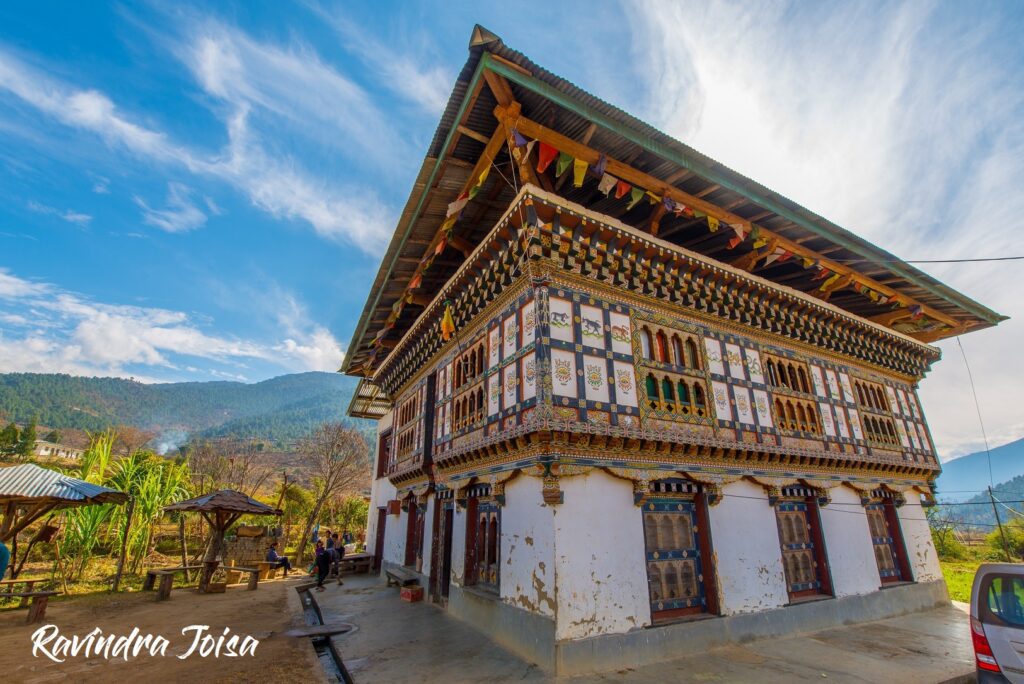
Village on the other side of Suspension Bridge

Best Time To Visit Punakha Suspension Bridge

Punakha enjoys a pleasant climate throughout the year. Visit Punakha in the months of February to April and October to December. It's best to stay away from this valley during the wet seasons, as flash floods are prevalent. Every year, the Tsechu festival takes place in late February or early March, giving it the perfect opportunity to appreciate Bhutan's spring weather and culture. The spring season, with a mean temperature of 18°C, ushers in stunning purple jacaranda blooming sceneries all down the valley.
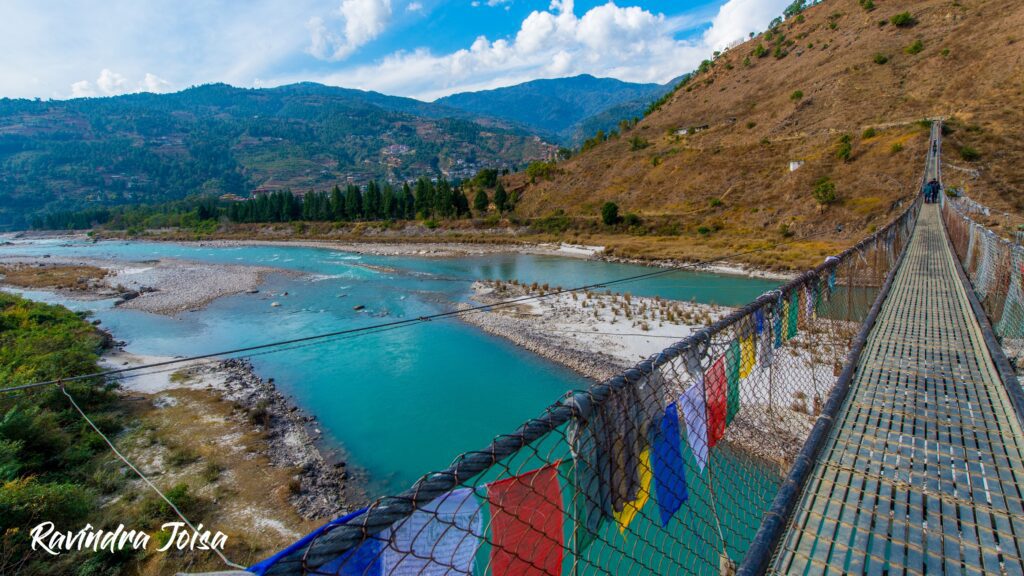
Pho Chhu Suspension Bridge Suspension Bridge

When was Punakha suspension bridge built?

Punakha Suspension Bridge in Bhutan is one of the world's oldest suspension bridges, said to have been erected by the Buddhist monk Thangtong Gyalpo. It has been refurbished several times over the years, but it was originally one of the eight bridges that served as the prototype for many of our current suspension bridges. The bridge's age is still a mystery.

To conclude, the place is unique with the walk along the longest bridge in Bhutan. The view of mountains in front and the traditional tea on the other side of the bridge makes this place interesting. Also, check the other spectacular and top 10 places to visit in Bhutan. In addition to these photos, watch the video below for more photos and to get a feel of the place in and around Punakha Suspension Bridge. Also, consider SUBSCRIBING to my YouTube channel.

https://youtu.be/Fc0by-do5Dg

Punakha Dzong - An Outstanding architectural masterpiece

Punakha Dzong - meaning 'great pleasure' or 'joy castle', is the administrative headquarters of Punakha. It is the second oldest and second largest dzong in Bhutan, and one of its most beautiful buildings. Moreover, Punakha Dzong served as the administrative headquarters until 1955.

Importance of Punakha Dzong

Punakha Dzong, located in western Bhutan, is often regarded as the country's most beautiful Dzong. In Bhutanese history, it is also the most important Dzong. The Dzong houses most of Bhutan's national treasures, and it was here that Bhutan's King, His Majesty King Jigme Khesar Namgyel Wangchuck, and his lovely bride, Bhutan's Queen Jetsun Pema, married in October 2011. The Punakha Dzong is by far Bhutan's most iconic landmark, rivaling The Tiger's Nest in Paro, so it's easy to see why it's one of the country's top three attractions, along with the Tiger Nest Monastery and Dochula Pass.

Punakha surrounded by Po Chu Mo Chu rivers

Location of Punakha Dzong

In the Punakha valley, the location of Dzong is in between the Pho Chhu (male) and Mo Chhu (female) rivers. Punakha is Bhutan's winter capital. Because Punakha Dzong is just 1,200 meters above sea level, you will not experience oxygen difficulties as you would at higher elevations such as Paro Taktsang (Tiger's Nest), making it an excellent spot to commence for beginning hikers who may experience altitude sickness in the first few days.

Punakha is also home to Bhutan's second-longest suspension bridge (Punakha Suspension Bridge), as well as Chimi Lhakhang, the Divine Madman's fertility temple, which is about 7.5 kilometers away by a vehicle. Also, visit Dochula Pass, which is midway between Paro and Punakha Dzong, to enjoy the panoramic Himalayan view. A stay further down on the banks of the river at a campsite in Punakha is a must.

That's Ravindra at Punakha Dzong

Why was Punakha Dzong built?

The significance of Punakha Dzong is that the dzong was one of the 16 dzongs erected by the Zhabdrung during his reign from 1594 to 1651 as an "embodiment of Buddhist principles." There are three docheys in the dzong (courtyards). A steep wooden draw stairway and a heavy wooden door that is locked at night are among the defensive fortifications installed in the dzong to protect it from enemy attacks. A big prayer hall was later erected after the dzong was damaged by a fire.

Punakha Dzong Architecture

Ngawang Namgyal is the mastermind behind Punakha Dzong and is Bhutan's second oldest and most magnificent Dzong. Also, It is a six-story building with a central tower situated at an average elevation of 1,200 meters against a picturesque mountainous backdrop. In addition, compacted soil, stones, and timber for doors and windows constitute the construction of the Dzong.

Six-story building with a central tower

Firstly, the Dzong was damaged by several fires and was extensively damaged as a result of the 1897 earthquake. A high wooden draw staircase and a massive wooden door are among the defensive measures that remain tall in the dzong to safeguard it from enemy attacks.

The Courtyards

Whitewashed Stupa in the first courtyard

The first courtyard houses the dzong's administrative buildings, a huge white-washed stupa, and a bodhi tree. The monks' living quarters are in the second courtyard. In this courtyard, there are two ancient halls. Also, the burials of Pema Lingpa and Ngawang Namgyal are in the third courtyard. It is located at the dzong's southern extremity.

Bodhi Tree in the first courtyard of Punakha Dzong

In the Mo Chu and Pho Chu rivers, flash floods generated by glacial lake outburst flooding in the upper parts of the valley are regular and have caused flooding and damage to the dzong in the past. Restoration is now complete with the Government of India sponsorship. The Dzong is now as magnificent as its historic times.

Inner Courtyard of Punakha Dzong

Festivals at Punakha Dzong

Domche is a yearly celebration held at the Dzong that attracts people from all around the region, including villages and outlying areas. There are some pretty magnificent performances during this five-day celebration, also known as the Punakha festival, which takes place in February/March. A re-enactment of the Tibetan invasion of Bhutan in 1639, in which the Tibetans were defeated, is a significant exhibit. Another annual rite at this dzong is the Lhenkey Dungchhur, which is a remembrance of departed spirits.

To conclude, the place has some amazing artwork, well-documented history and attracts a lot of visitors. In addition to these photos, watch the video below for more photos and to get a feel of the place in and around Punakha Dzong. Also, consider SUBSCRIBING to my YouTube channel.

https://youtu.be/uhqiYPu6Q2M