Chimi Lhakhang - An exceptionally unique monastery

The Land of Thunder Dragon in the Himalayas, Bhutan is a heavenly place to visit. A country that gives priority to the happiness index. In addition, this country is full of stupas, Buddhist monasteries, and artwork. So, expect all the places to be tranquil and serener. But, there is one less known and unique monastery by the name Chimi Lhakhang, with a lot of penises around. Yeah, you heard that right.

Chimi Lhakhang - Yowakha village farmland - Ravindra Joisa
Hiking through the Yowakha village and farmland. Image: © Ravindra Joisa

Why Chimi Lhakhang is important?

It is well-known across Bhutan as a fertility-inducing location for all guests who come here hoping to have a kid. Several pilgrims, particularly newlywed couples, come here to seek the blessings of the saint who is reputed to possess the Magical Thunderbolt Of Wisdom.

Chimi Lhakhang, located in the Punakha requires district-level permission. However, a tourist guide will help you with the necessary permissions. The fee is per day stay in Bhutan and can be super expensive for outsiders other than a few countries in the Indian subcontinent and a guide is a must.

Where Chimi Lhakhang located?

Chimi Lhakhang is on the way to Punakha Dzong. It is just over 100 kilometers from Paro and 65 kilometers from Thimphu. But it takes 2-3 hours to drive in the mountains. Meanwhile, reaching the Chimi Lhakhang monastery from the highway is an approx one-kilometer hike. The hike is scenic, crossing the paddy fields, via the Yowakha village full of handicraft stores, paintings, and prayer flags. Also, the hike can be even more picturesque if you take the back entrance, next to the Puna Tsang Chu river.

The scenic route behind Chimi Lhakhang is next to the Puna Tsang Chu river. Image: © Ravindra Joisa

What is a fertility temple? - Chimi Lhakhang

Chimi Lhakhang monastery is no different from other monasteries, it just has a lot more penises. This monastery also known as the Fertility temple was originally built back in 1499 AD on a short hill. This penis-focused monastery is dedicated to Buddhism's "Divine Madman". In addition, he was 'the monk of 5000 women', his unorthodox ways of teaching Buddhism by singing, humor, and outrageous behavior, was shocking and with sexual overtones. Women who come to the temple in the hopes of conceiving are forced to carry a wooden phallus around the temple three times.

Who built the Chimi Lhakhang?

Chimi Lhakhang, also known as the Chimi Monastery or Temple, is a Buddhist monastery in Punakha District, Bhutan, near Lobesa. It was erected by the 14th Drukpa hierarch, Ngawang Choegyel after the land was blessed by the Divine Madman, the maverick saint Drukpa Kunley.

Chimi Lhakhang Fertility temple
Chimi Lhakhang Fertility temple. Image: © Ravindra Joisa

Significance of Chimi Lhakhang

Divine Madman is also the saint who advocated the use of phallus symbols as paintings on walls and as flying carved wooden phalluses on house tops at four corners of the eaves. The monastery is the repository of the original wooden symbol of the phallus. The wooden phallus has a silver handle as decoration. People are blessed with the wooden phallus, who visit the monastery on pilgrimage, particularly women seeking blessings to beget children. More on inside the temple structure and tradition refer to the wiki.

Chimi Lhakhang - Fertility temple  Image: © Ravindra Joisa

Other places to visit nearby

About 15 minutes drive from Chimi Lhakhang is the beautiful Punakha Dzong, where the royal wedding takes place. Therefore, for tourists, this is a must-visit place. After that, a kilometer drive from here is a beautiful campsite where you can stay overnight, right next to the river. Also, on the other side of Punakha Dzong is the Punakha Pho Chhu suspension bridge. However, vehicles are not allowed on top of this bridge. Cross the bridge and have some local tea on the other side of the river in a traditional style.

You might also like: World’s largest mountaintop statue of Buddha Dordenma

Chimi Lhakhang - Yowakha village artwork
Yowakha village - House decoration and wall paintings. Image: © Ravindra Joisa

To conclude, a visit to this place is unique, if you consider all the images that are put up in each and every house. Also, considering the story you get to hear of the divine madman. Above all, as this is a fertility temple, people from all around the world visit this place hoping to get the blessings to beget children. Also, do not forget to visit one of the local handicraft stores on the way to this temple. Even the world-famous Thangka paintings (more details) are available. Check out the YouTube video below and please consider subscribing to my YouTube channel.

https://youtu.be/upoqSUIXGyo
YouTube Video. Please SUBSCRIBE. © Ravindra Joisa

Beautiful campsite of Jobra with breathtaking Valley view | Hampta Pass Trek | Day 1

Hampta Pass is a famous hike if you are in Himachal, India. Also, this is a 5-6 days hike and an ideal hike for beginners to get that true Himalayan hiking experience. Additionally, you will be covering the most picturesque lake after the trek. The trek starts from Jobra and ends at Chhatru. The trek has some breathtaking landscapes, stream crossing, and many more. However, I recommend a short weekend hike before attempting this trek. For instance, you might want to go for a weekend hike to the western ghats.

Pine forest in the Kullu Manali valley on the way to Jobra basecamp - Hampta Pass
Pine forest as you drive uphill to Jobra campsite. Copyright: Ravindra Joisa

In this post, I will be covering the first day of reaching the campsite located at Jobra, the basecamp for Hampta Pass. After that, I will be sharing more posts for each of my days spent on this slope. In addition, you might want to check the video on YouTube which is at the end of the post. So, consider subscribing to my channel - link.

Staying a bit outside of Manali town can keep you away from the tourist crowd. Also, booking a room on the mountain slopes with a beautiful view can be a memorable stay. Gather enough ration needed for your hike and pack your backpack. Because there are no shops on reaching basecamp or on the way up. However, you might find a few huts during the trek where you can have maggie, tea, and snacks.

Drive to Jobra campsite

There is no public transport available to reach the Jobra campsite. The only option would be to hire an expensive jeep drive to the top. This will cost around ₹ 2,600 per vehicle which you can share among other trekkers. However, if time permits, then it can easily be a one-day hike to the Jobra campsite. It is a picturesque drive from Manali to Jobra with some 40+ hairpin curves and a one-hour drive uphill. The panoramic view of Kullu valley with the mountain slopes full of pine trees is just breathtaking.

Rani Nallah. Trekker crossing over the stream. Copyright: Ravindra Joisa

The short trek to Jobra basecamp

The drive starts from the Manali bus stand and ends near the hydel plant and the reservoir. After that, you will have to hike for another 45 minutes from here to reach basecamp. As you enter the forest, the trail is through the pine trees, a few maple trees. In addition, the last stretch as you come out of the forest area is the meadows. The hike is right next to the Rani Nallah / stream. Likewise, the next three campsites are right next to this stream till you reach Hampta pass.

Jobra campsite - Hampta Pass trek in the Himalayas, India
Jobra Campsite - Day 1 of Hampta Pass trek. Copyright: Ravindra Joisa

To sum up, there isn't much of a hike on day one. It is more of an uphill drive followed by a short hike. But, the scenery that you get to see on the way is breathtaking. Also, even at the Jobra campsite, the view above the cloud is heavenly. Explore the campsite at Jobra. Spend some time next to the wooden bridge and a small waterfall nearby. Similarly, you get to see many unnamed waterfalls all along the trail.

My advice would be to spend less time inside the camp and explore the campsite around. Enjoy the clean air, morning mist, clear night sky, etc. It might rain at times. So, I recommend, carrying an umbrella or a rain cover. The temperature drops below 5 degrees Celcius. Therefore, having an additional layer of clothing is advised.

https://www.youtube.com/watch?v=PdCWUqVIkm0
SUBSCRIBE for more videos. Copyright: Ravindra Joisa

Read Next: Day 2 of Hampta Pass trek from Jobra to Jwara campsite.

Hotels in Manali

There are no hotels or homestays in Jobra. On the previous day before the start of the trek, you can stay in Manali. The landscape is scenic and you can stay in hotels rooms with some amazing views. There are hostels where you can stay overnight for as little as rupees 250 to the expensive hotels.

Check out the remaining days of the trek by clicking here.

https://ravindrajoisa.com/hampta-pass/

Kibber Chicham Ropeway - An Extraordinary Canyon ride

Chicham - a remote village in the Himalayas in India. Spiti Valley is one of the world's most beautiful places on planet earth and has some stunning landscapes, lakes, canyons, glaciers, and snow cap mountains. As a result, adventure lovers flock around Spiti valley from all over the world. In addition, you will find a lot of bikers exploring this place.

There are these little know villages where a few families have lived for generations without any infrastructure or connectivity. However, the beauty of this place and the considerate nature of people make this place an ideal getaway. One such village is 'Chicham'.

Chicham village
Chicham Village as seen from the trail to Kanamo Base Camp. Image Copyright: Ravindra Joisa

How did I come to know this place?

Exploring the Himalayas is something that I love. Visiting a place that is less crowded, peaceful, and away from any kind of mobile connectivity is what I like. This time, the trek was not the usual trek. I usually go on a hike for a few days. But, this trek was a summit climb to Kanamo Peak which is at 19600 feet. And Kibber which is the village adjacent to Chicham is the basecamp.

Where is Chicham Bridge situated?

The nearest town to Kanamo is Kaza and the best place to collect all the ration needed for the trek. There is road connectivity to the basecamp, Kibber which is another village similar to Chicham. We reached Kibber a day in advance to get acclimatized to 14,000 feet. The only village around is Chicham which is more like a backyard to Kibber village.

Chicham and Kibber - Parilungbo canyon, Spiti valley
Parilungbo canyon and Kanamo peak to the top right. Image Copyright: Ravindra Joisa

What is Chicham Bridge famous for?

Which is the tallest bridge in Asia? - The tallest bridge in Asia may be seen in Spiti Valley. Yes, it is home to the Chicham Bridge, Asia's tallest bridge, and an amazing sight to behold. The bridge, which stands at a dizzying height of 13596 feet, is the highest bridge in Himachal joins the communities of Chicham and Kibber. The bridge was under construction at the time I visited this place and is now a major tourist attraction. The bridge has made the like of people living in these villages easier with better connectivity and an increase in tourism.

Spine-Chilling Chicham Ropeway

Chicham and Kibber had no connectivity before. Other than a round trip to Kaza, there is a Parilungbo canyon separating the two villages. So, the only way to reach Chicham from Kibber was to hike down to the Spiti river tributary and climb up. And, that would take half a day. This route was being used by the locals to carry heavy goods.

https://www.youtube.com/watch?v=JwIVbhLvGBM
Crossing Parilungbo Canyon using a simple ropeway.

But, locals without luggage had an alternative to cross the canyon with a self-propelled ropeway. Also called the Kibber Chicham Ropeway. There is absolutely no safety, but locals risked their lives to cross the canyon. Recently, the government has built a bridge connecting the two villages. During my visit, the Chicham bridge was under construction and I doubt if the ropeway still exists.

The ropeway has no backup power, motor, or any kind of safety and is completely manual. Luckily, in the video, you can see our trekking team pulling the rope. Also, the present-day Chicham bridge can be seen to the right in the video but was under construction at that time. So, if you have the guts needed to sit in that little cart and cross the canyon which is at a height of 150 meters, without any kind of safety gear then leave a comment.

https://youtu.be/vx41M7sxoOs

You might also like: KANJI – A REMOTE VILLAGE IN THE HIMALAYAS

Kanamo Peak which is approximately 19,600 feet high can be seen from these two villages. People stay at Kibber before making an attempt to climb the summit. The village stay is ideal if you are not acclimatized to this high altitude.

https://youtube.com/playlist?list=PLBtUUJUvar6qBtz1_EuRE7QhnTGYN-d0S

To conclude, this was a true adventure trip that I had and something that you should definitely experience. So, SUBSCRIBE to my YouTube channel and to my blog for more travel and photography stories. In addition, you can follow me on Instagram - @ravindra_joisa to see all my travel stories.

Kanji - An Extraordinary village with some amazing people

Kanji village - Leh - Haniskot

Kanji is a Himalayan village that is incredibly secluded. The settlement is roughly 12 kilometers from Haniskot, which is located on the NH1 Kargil-Leh route and is only accessible for four months of the year. Kanji is well-known for its harsh scenery and the perilous path between Haniskot and Kanji.

Kanji photo by Ravindra Joisa

How to reach Kanji?

Kanji is 12 kilometers away, and the only route to getting there is through the settlement of Haniskot. Haniskot is located on National Highway One, which connects Kargil and Leh. Haniskot and Kanji are connected by a tar road. The road is part of India's PGSY (Pradhan Mantri Gram Sadak Yojana). The location is close to Foto La (pass) and Lamayuru. The location is great for a long weekend trip from Leh or for people who wish to ride their bikes about.

Route to Kanji Village

The route begins with a sharp downhill, followed by a 10-degree gentle ascent all the way to Kanji. Even though significant rain is exceedingly unusual in this region, the roadways are narrow and prone to landslides. The roads follow a stream (which appeared to be more of a river) all the way to the settlement.

The village Kanji

Kids from Kanji village

The majority of the population in this area are Buddhists, and there are three monasteries. There is only one food store and one Tea shop. There are 52 homes and a primary school in total. Despite the fact that this area is buried in thick snow for six to eight months of the year, agriculture is the major profession in this area. Fortunately, this location is now connected by an excellent road, which serves as a lifeline. Lovely folks to converse with, and the high school students like playing cricket.

There are numerous antique, traditionally constructed structures in the area. The Tibetan culture has had a strong effect on the community, as seen by the clothing. The community ensures that no political or religious pressures interfere with their way of life.

When I visited this location, I mostly saw seniors and young children playing cricket on the village road. The majority of the middle-aged males commute to adjacent towns such as Lamayuru during the week and return home on weekends or late at night.

Senior Citizen at Kanji village

I happened to visit this place during my National High Altitude Mountain Biking Expedition in Leh conducted by the Youth Hostel Association of India. This was an off-route visit. As we reached the campsite at Haniskot by lunchtime and had enough time to explore, we took our mountain bike to this beautiful little-known village of Kanji.

Hotels to stay

In this village, there may be fewer places to stay. You may have to camp in a tent or there may be a few houses stays available today. People are nice, so you may even ask for the locals. Another alternative is to stay in the Haniskot Government Guest House. Hotels in Lamayuru may be found if you walk farther, once you cross the Foto La TV tower and proceed all the way down. It is a little village that attracts travelers. Lamayuru is well-known for its lunar landscape and monasteries.

https://youtu.be/S27trVnk6PI

To summarise, this distant location Kanji is a must-see if you want to witness severe roads, a lonely community, and camping near to an agricultural area. There will be no telephone network, power, gas, or water supply. Water should not be an issue. There were government efforts underway to deliver power to this location, as well as an optical fiber project. This is an excellent location for anyone going by bike, vehicle, or campervan. Because many people are unaware of its existence, it does not receive a large number of visits. Watch the movie below to get a sense of my trip to this location, and don't forget to subscribe to my channel.

Takes 9 years to master - Thangka Painting - A Meticulously crafted artwork

Thangka painting has its origins in Tibetian Buddhist paintings. These paintings are made in Bhutan, Nepal, Tibet, and India. Thangka paintings are made on cotton, silk, and human skin depicting the 'mandala' (Mandala in Sanskrit means is a spiritual and ritual symbol representing the universe). Thangka paintings usually represent the life of Buddha.

Thangka Painting
The painting takes a few months to complete. An artist completing his painting work.

The Thangka Painting Gallery

There are multiple Thangka painting galleries in Bhutan and Nepal. I visited one of these galleries. The place is located next to an ancient paper mill in Thimphu town. The 'Thangkha Painting Gallery' is a school for many who want to learn as well as this place has some of the incredible paintings in the display room.

Visitors are not allowed to record or capture the final paintings. With permission, I managed to get the video and photos of those people who were working at this gallery. Thanks to the friendly staff. The gallery has paintings, craftworks, dragon masks, cloth items. The staff explained to us how it is made, the colors used, when and where it is used, etc.

Also read: 4000 years old Domkhar Rock Art Sanctuary

The Thangka Painting Gallery
The Thangka Painting Gallery. We were denied photographing the finished products which are inside the main gallery.

How is Thangka Painting made?

The detailed work, the amount of time and training involved in doing each of these paintings astonished me. It takes more than 6-9 years to master this painting work. Each of these paintings takes almost 1 year of work to complete. No wonder why these paintings are so expensive. The size of each of these paintings varies from A4 size to huge paintings, which are displayed in Monasteries during rituals or ceremonies.

Check out the video below where you can see the Thangka Painting gallery which is in Thimphu and people are busy with their artwork. These Thangka Paintings are super expensive and can easily cost 1000s of American US dollars. I have found a few online which is inexpensive but are equally good, ideal for home decor.

Most of the Thangka paintings are traditionally kept unframed and rolled up when not on display. These paintings are made of natural color and are very delicate, have to be kept away from moisture. These paintings depict the life of Buddha, mantras, various influential lamas, the visual representation of the art of enlightenment, etc.

https://youtu.be/wicAdpMcENw

At this art gallery, you will find professional artists painting with natural colors. Also, there are other handmade crafts, like the mask used in festivals where they perform the mask dance.

Traditional Paper Mill

Also, if you go a little further outside of this gallery, you will find the old traditional way of making paper. These traditional ways of making take time and money and this is the only mill that is present as of today. The papers are mainly used for artwork, paintings, manuscripts. The paintings and manuscripts are kept available for sale at this art gallery. Also, you get notebooks made of these papers which is expensive.

The traditional way of making paper
Inside of Paper Mill

Other places to visit nearby include the Thimphu Dzong, Buddha Dordenma - the World’s largest mountaintop statue of Buddha. Also, check the top 10 Spectacular places to visit in Bhutan.

In short, these paintings are beautiful. A close-up view of these paintings will show you the kind of effort that has gone into the making of each of these masterpieces. No wonder the finished product is so expensive considering the training it takes to make this, the natural colors, and most importantly the time it takes to complete just one painting.

If you enjoyed reading this content then you can buy me a coffee to support my work or buy some of my photos from my store. Also, join my friendzone and signup for my newsletter.

Buddha Dordenma - World's largest statue that is Vivacious

The world's largest mountaintop statue of Buddha Dordenma is located in the western parts of Bhutan, Thimphu. A must-visit place if you are in Thimphu. The huge structure of Buddha (Shakyamuni) is made of bronze and is gilded in gold. The view from here is breathtaking as it overlooks the southern entrance to Thimphu valley. Also, this mega-structure of Buddha Dordenma is located atop a hill in Kuenselphodrang Nature Park, Thimphu, the capital of Bhutan.

Largest statue of Buddha Dordenma

About the statue of Buddha Dordenma

The statue of Buddha Dordenma is 169 feet (51.5 meters) high. Within this megastructure are 125,000 smaller Buddha statues. Of this, 100,000 are 8 inches tall and 25,000 are inches tall. The statue of Buddha Dordenma is on top of a large meditation hall.

Two prophesies are fulfilled by the monument as well. The first, as predicted by yogi Sonam Sangpo, is the construction of a Buddhist statue in the area to "bestow blessings, peace, and happiness on the whole globe." Furthermore, Guru Padmasambhava, sometimes known as the "second Buddha," is supposed to have described the statue in the seventh century. By fulfilling both prophesies in a gleaming manner, this statue kills two birds with one stone.

Who built Buddha Dordenma in Bhutan?

This is a brand new structure that was built recently. The statue was built at a cost of US$47 million by Aerosun Corporation of Nanjing, China, and was financed by Singaporean billionaire Rinchen Peter Teo. The overall cost of the project exceeds US$100 million. These hundreds of smaller Buddhas, like the giant Buddha, are plated and made of bronze, which is one of the reasons the statue cost about $100 million to create when it was built in 2015 to commemorate the 60th birthday of Jigme Singye Wangchuck, Bhutan's fourth monarch.

Buddha Dordenma - Ravindra Joisa - Twitter

Where is the Buddha statue located?

The drive to this location is scenic. To reach this place from Thimphu, you can drive to the backside of the structure or park in front, but there is a staircase all the way up from the main entrance. Once you climb the stairs, the open space is big enough to accommodate a few thousand. The statue of Buddha Dordenma is sited amidst the ruins of Kuensel Phodrang, the palace of Sherab Wangchuck, the 13th Desi Druk. I would recommend going in the evening to enjoy the view from the top.

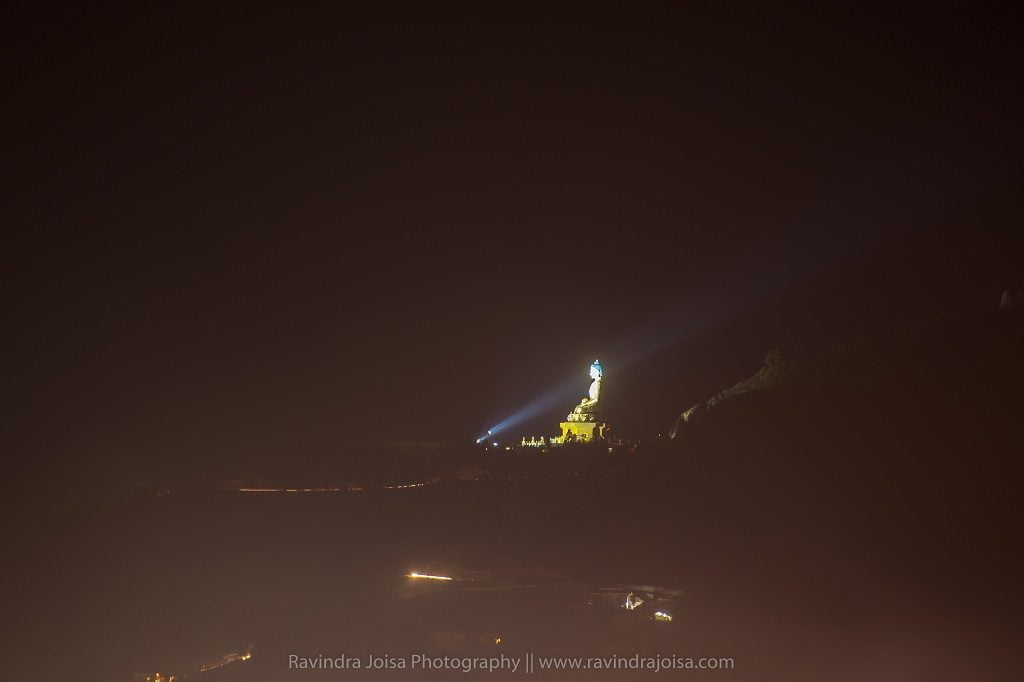
The ideal time to visit would be during summer in Bhutan for those who do not like snowfall. Firstly, this new structure is a must-visit place in Thimphu. Secondly, the lighting at night and the view is from far off, is breathtaking.

Largest statue of Buddha
Zoomed in view from Thimphu

Other places to visit in Thimphu

When you are in Thimphu consider visiting the beautiful Dzong, Thangka painting and art gallery, and National Memorial Chorten. Also, there is a Scottish cafe with some best snacks. We spent some time here in this cafe on a cold night and was a wonderful experience.

From here, you may visit the Dochula (pass) and the Chimi Lhakhang, the fertility temple which is on the way to Punakha Dzong where you can camp overnight. Also, visit the famous suspension bridge which is next to the Dzong, and consider river rafting if time permits. Support my work by joining my FriendZone and following on social media for more travel and photography updates.

For more information, you may visit the Bhutan Tourism website or buy a copy of the Lonely Planet Bhutan book which has all the required information on hotels to stay, cafes, places to visit in detail. Hope you enjoyed reading this blog post. Buy me a coffee to support my work or you can go to my store to buy some of my images. Also, do not forget to join my FriendZone by signing up for my newsletter.

Zanskar River Rafting - Highest and the second toughest in India

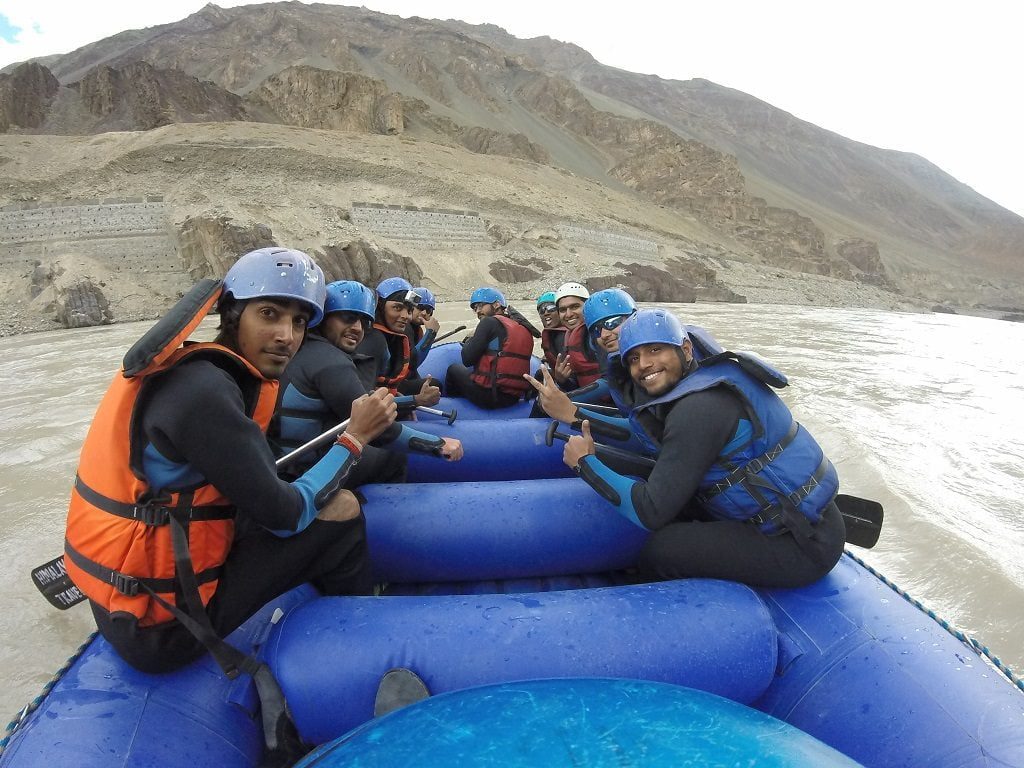
The Zanskar river rafting is the most difficult high altitude, highest in the world, and the second most difficult in India. If you're in Leh, this is a must-do adventurous excursion. The Zanskar River is famed for the famous 'Chadar Trek' (frozen river) that takes place during the winter when temperatures drop to minus 30 degrees Celsius. During the summer, the same river is popular for river rafting.

Zanskar River rafting

In the 24-kilometer section of the Zanskar River, there are around twelve rapids and a few whirlpools. There is a shorter, gentler one that is 8-12 kilometers long and has only 3 or 4 rapids. The lengthier one is full of excitement and adventure. Zanskar river rafting is high-altitude rafting at an altitude of more than 11,000 feet, making it the highest in the world. Ascertain that you are acclimatized to this altitude. You may do this by remaining in Leh for two days and doing nothing. After the Brahmaputra, the Zanskar river rafting is the second most difficult in India, with a grade 4 level.

Where can I go rafting in Leh?

The site is on the Leh - Kargil route, near Ladakh Union Territory. Leh is the nearest airport. The organizers' actual site is the Sangam, where the Zanskar and Indus rivers merge to form the Indus River. Zanskar is a tributary of the Indus River that flows north.

zanskar river rafting starting point

Prepare at the campground, which is near National Highway One, with the swimsuit/cold water jacket that they give, as well as the life jackets and helmets. The organizers will transport you to the starting spot, which is roughly 24 kilometers away. The journey to this location is full of adventure, with severe hairpin corners, landslides, no asphalt road in a few spots, and no road railing - one bad move by the driver, and you'll be all the way down in the Zanskar river. The coolest part is that you can stand on the backside of the vehicle. You can see this in the video below.

Zanskar river starting point

The Zanskar river rafting

The river rafting adventure begins with a set of instructions and a brief warm-up on how to paddle and so on. The Rapids begins almost instantly. Some of the most hazardous areas at the start and in the middle. After roughly 30 minutes from the start, there is a little pause. After the break, there are a few additional rapids, followed by a whirlpool near the bridge. After we cross the bridge, the remaining few kilometers are completely flat. The entire travel took about an hour. The water is ice cold, and you can even dive near the tent at the further end.

Is Zanskar river rafting safe?

Rafting may also be done on the Zanskar river's rapids. Because the rivers include rapids ranging from level 1 to level 4, you may select the rapid based on the amount of difficulty you are ready to tackle. Rafting in Leh is a safe activity that can be enjoyed with an open mind and an enthusiastic heart.

Zanskar River Rafting

What is the price of river rafting?

The Zanskar river rafting price package costs between 1,000 and 1,500 rupees and includes 24-kilometer travel to the starting location in a jeep or minibus, a swimsuit to protect you from the chilly water, a safety jacket, a guide and instruction expenses, permission, boat, and lunch. The costs of the action camera are an additional 1000 rupees. I recommend bringing your own action camera with a head mount with you.

Zanskar river rafting Safety

Instructions will be given at the start, as well as a guide in the boat while rafting, another guide who will kayak alongside us for the duration of the adventure, a safety jacket, cold water suit, helmet, and a jeep that will follow us on the road that runs along to the Zanskar river. The guides are certified and trained in Rishikesh, another popular river rafting destination in India.

Also, read my other adventure stories and other activities that you can do when in Ladakh.

https://youtu.be/iJKZBC-Eeao

Hope you enjoyed reading this blog post. Buy me a coffee to support my work or you can go to my store to buy some of my images. Also, do not forget to join my FriendZone by signing up for my newsletter. Check out the video below and subscribe to my YouTube channel for more travel and adventure stories.